Restorative Dentistry in San Jose
Repair damaged teeth. Replace missing teeth. Enjoy your smile again.
A broken tooth can change what you order for dinner. A missing tooth can change how you smile. Worn teeth or an unstable denture can make everyday activities feel like work. Restorative dentistry helps repair these problems so you can chew more comfortably, speak confidently, and protect your remaining teeth.

At Calm Dental Care in San Jose, CA, Dr. Douglas R. Maxson provides restorative treatment tailored to your teeth, gums, bite, and goals. Whether you need one tooth repaired or several teeth rebuilt, your care begins with understanding what is happening—and explaining your options clearly.
What is restorative dentistry?
Restorative dentistry repairs decayed, damaged, or worn teeth and replaces missing teeth. Treatments include tooth-colored fillings, dental crowns, bridges, partial dentures, complete dentures, and dental implants.
The right treatment depends on how much healthy tooth structure remains, the support around your teeth, and the forces placed on them when you bite. Appearance matters, too. A restoration should fit comfortably into your smile while helping your mouth function well.
One dentist, one coordinated treatment plan
Dr. Maxson’s decade of full-mouth reconstruction training at the Las Vegas Institute informs his approach to complex restorative care. His training in occlusion—the way your teeth meet—and neuromuscular dentistry helps him consider how your teeth, jaw muscles, and bite work together.
At Calm Dental Care, treatment planning connects each stage of care. When extractions, implants, and final restorations are appropriate, those steps can be coordinated in one office. You can understand how today’s treatment contributes to the finished result.
Options for repairing damaged teeth
Tooth-colored composite fillings
Composite fillings repair cavities and replace missing tooth structure using material selected to blend with your natural teeth. They may also repair certain chips or small defects.
A filling is often appropriate when enough healthy tooth remains to support it. When damage is more extensive, a restoration that provides greater coverage may be recommended.
Dental crowns
A dental crown covers a damaged or weakened tooth to restore its shape and function. Crowns may be recommended for a large fracture, extensive decay, or a tooth that needs protection after root canal treatment.
Dr. Maxson evaluates the remaining tooth structure, gum health, and bite before recommending a crown. The goal is to protect a tooth that can be maintained successfully.
Inlays, onlays, and other repairs
Some teeth need more support than a filling provides without requiring a full crown. An inlay fits within the chewing surface; an onlay also covers one or more tooth cusps. Depending on your situation, these or other restorative approaches may be considered.
Options for replacing missing teeth
Dental bridges
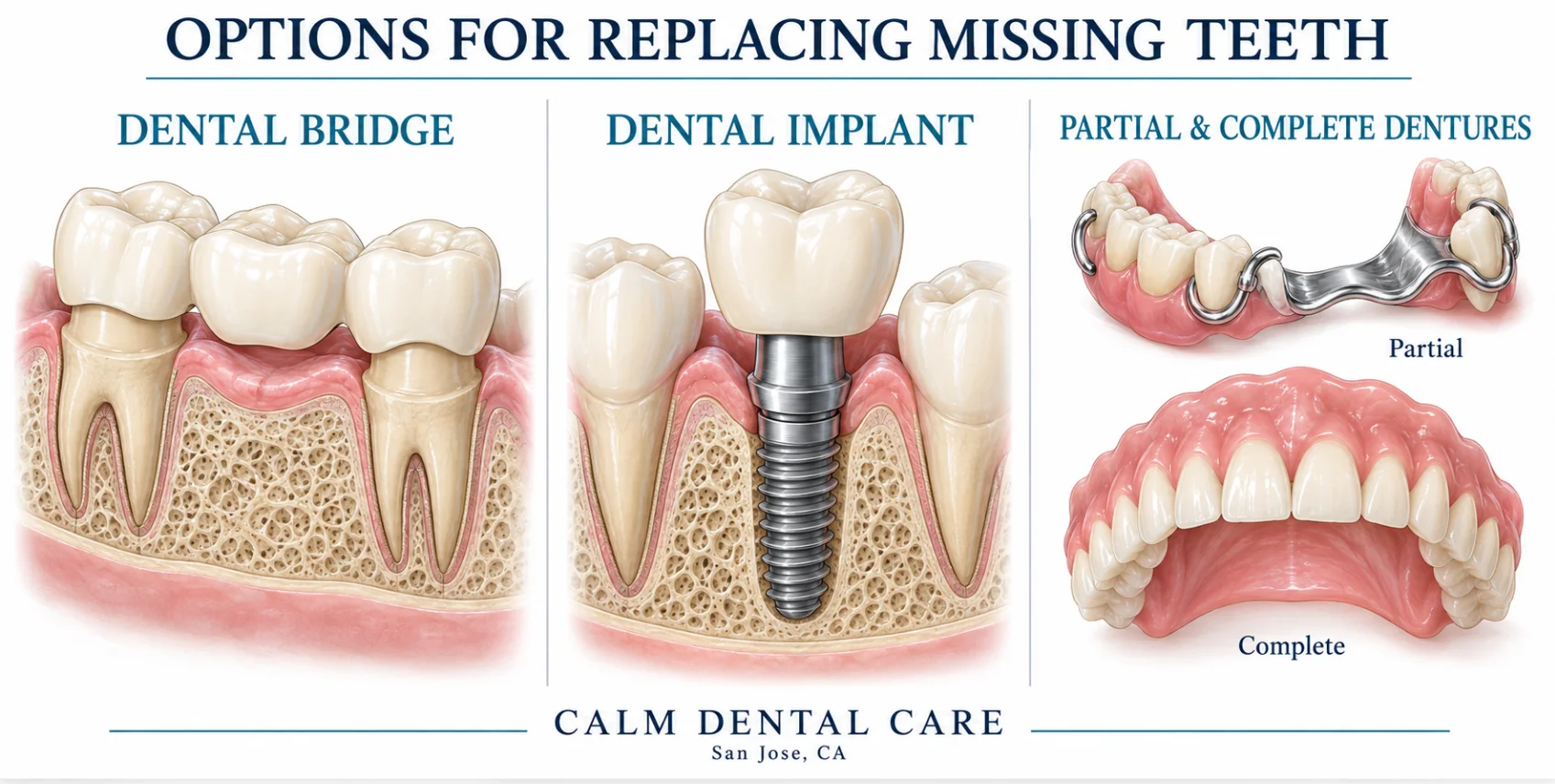
A dental bridge replaces one or more missing teeth by filling the space with replacement teeth supported by natural teeth or implants.
A bridge may help restore chewing and appearance. Your options depend on the location of the gap and the condition of the teeth or implants supporting it.
Dental implants
A dental implant is placed in the jawbone to support a crown, bridge, or denture. It replaces the supporting role of a missing tooth root.
Dr. Maxson evaluates your bone, gums, medical history, and imaging to determine whether implant treatment is appropriate. Implants require healing time, daily cleaning, and ongoing professional care. They are a long-term treatment option, but they are not maintenance-free.
Partial and complete dentures
Partial dentures replace several missing teeth while working alongside your remaining natural teeth. Complete dentures replace an entire upper or lower arch.
Fit, appearance, speech, and chewing comfort all matter. For suitable patients, implant-supported dentures may provide additional stability. We will explain how removable and implant-supported options differ so you can make an informed decision.
When several teeth need attention
Full-mouth reconstruction combines treatments to address extensive wear, damage, or tooth loss. It is a personalized plan rather than a single procedure.
Dr. Maxson considers your gum health, remaining teeth, bite, and replacement options together. Treatment may be completed in stages, with priorities established around your clinical needs and circumstances.
What happens at a restorative consultation?
Your visit begins with your concerns. Are you avoiding certain foods? Does a tooth hurt when you bite? Is your denture moving? Are you hoping to save a tooth?
An examination and imaging, when needed, help identify the cause. Dr. Maxson then explains the findings, reasonable treatment alternatives, and the sequence of care. Ask about expected costs and appointment requirements before deciding how to proceed.
Frequently asked questions
Should I choose a filling or a crown?
A filling repairs a more limited area of damage. A crown provides broader coverage when a tooth needs additional protection. The amount and condition of remaining tooth structure guide the recommendation.
Is an implant better than a bridge?
Neither is best for everyone. Bone support, adjacent teeth, gum health, treatment time, and cost all influence the choice.
How long do dental restorations last?
Longevity varies with the restoration, oral hygiene, gum health, grinding, and bite forces. Regular examinations help identify wear or problems early.
Does restorative dentistry improve appearance?
It can improve appearance while restoring function. Tooth color, shape, and position are considered alongside comfort and durability.
Ready to feel calm about restoring your smile?
Call Calm Dental Care at (408) 996-0176 or request an appointment online with Dr. Douglas R. Maxson in San Jose, CA. We will help you understand your options and choose your next step.