Dental Cleanings, Exams & Preventive Care in San Jose
Healthy teeth should help you enjoy dinner, laugh comfortably, and get through your day without worrying about your mouth. Preventive dental care combines daily brushing and cleaning between your teeth with professional cleanings, dental exams, and protective treatments such as dental sealants when appropriate. Together, these steps help prevent cavities, control gum inflammation, and protect the tissues supporting your teeth.

At Calm Dental Care in San Jose, California, Dr. Douglas R. Maxson and our team help you build a preventive care routine that fits your mouth, your health, and your life. Our goal is to identify problems early, when treatment is often simpler and less extensive.
What happens during a routine cleaning and exam?
A routine visit usually takes about an hour and includes both a professional cleaning and a complete examination. Our hygienist removes plaque and tartar from above and below the gumline, polishes your teeth, and can point out any spots your brush and floss keep missing. Dr. Maxson then examines your teeth, gums, bite, and any existing fillings, crowns, or implants.
Assessing your gum health: We gently measure the small space between each tooth and its gum, and check for bleeding, recession, or loose teeth. Shallow spaces that don't bleed are a healthy sign; deeper pockets can signal gum disease that deserves attention before it progresses.
When X-rays are recommended: Digital X-rays are not taken at every visit. We suggest them based on your risk of cavities, your history of dental problems, the condition of existing dental work, and how long it has been since your last images. Modern digital X-rays use very low radiation, and we only take the views we actually need.
Planning your next visit: Before you leave, Dr. Maxson tells you honestly how often he would like to see you. Many patients do well with cleanings and exams every six months; if you have a history of gum disease or other risk factors, an interval of three to four months may protect your smile better.
Can good oral hygiene help you avoid periodontal surgery?
Consistent home care, professional cleanings, and early treatment can reduce your risk of advanced gum disease and the need for periodontal surgery. However, prevention cannot guarantee that surgery will never be necessary. (NIDCR, NIH: Periodontal Disease)
Gum disease begins when bacterial plaque collects along the gumline. Early inflammation, called gingivitis, can often be reversed with effective daily cleaning and professional care. If disease progresses to periodontitis, it can damage the tissues and bone holding your teeth in place.
Treating periodontal disease early may allow us to control it with nonsurgical care, such as scaling and root planing. Advanced disease sometimes requires surgery. Waiting until teeth hurt or feel loose can mean losing valuable opportunities for earlier treatment. Learn about periodontal therapy →
Brush twice daily—and make those minutes count
Brush for two minutes, twice a day, using fluoride toothpaste and a soft-bristled toothbrush. Clean the outside, inside, and chewing surfaces of every tooth, paying particular attention to the gumline.
Use gentle pressure. Scrubbing harder does not clean better and can contribute to gum recession and tooth wear. An electric toothbrush may help if reaching certain areas or maintaining a consistent technique is difficult.
Our hygienists can demonstrate small adjustments that make your brushing more effective. A personalized demonstration often helps more than another reminder to “brush better.”
Why flossing matters even when you brush well
Your toothbrush cannot thoroughly clean the tight spaces between your teeth. Floss once daily, gently curving the floss around each tooth and moving it along the tooth’s surface near the gumline. Avoid snapping it into your gums.
Depending on your teeth, dental work, and dexterity, interdental brushes or a water flosser may also be useful. We can help you choose an approach you will actually use.
Bleeding when you floss deserves attention. It often signals inflammation, rather than a reason to stop cleaning. Continue gentle care and arrange an evaluation if bleeding persists.
Professional cleanings reach what home care cannot
Plaque can harden into tartar, which brushing and flossing cannot remove. Professional cleanings remove these deposits, while examinations help identify cavities, gum changes, and other concerns.
A gum evaluation may include measuring the spaces around your teeth and checking for bleeding, recession, or changes in tooth support. Dental X-rays, when indicated, can help reveal bone loss that is not visible during a simple look inside your mouth.
If you already have periodontitis, a routine cleaning alone may be insufficient. Periodontal treatment and ongoing maintenance address different needs.
Dental sealants: extra protection against cavities
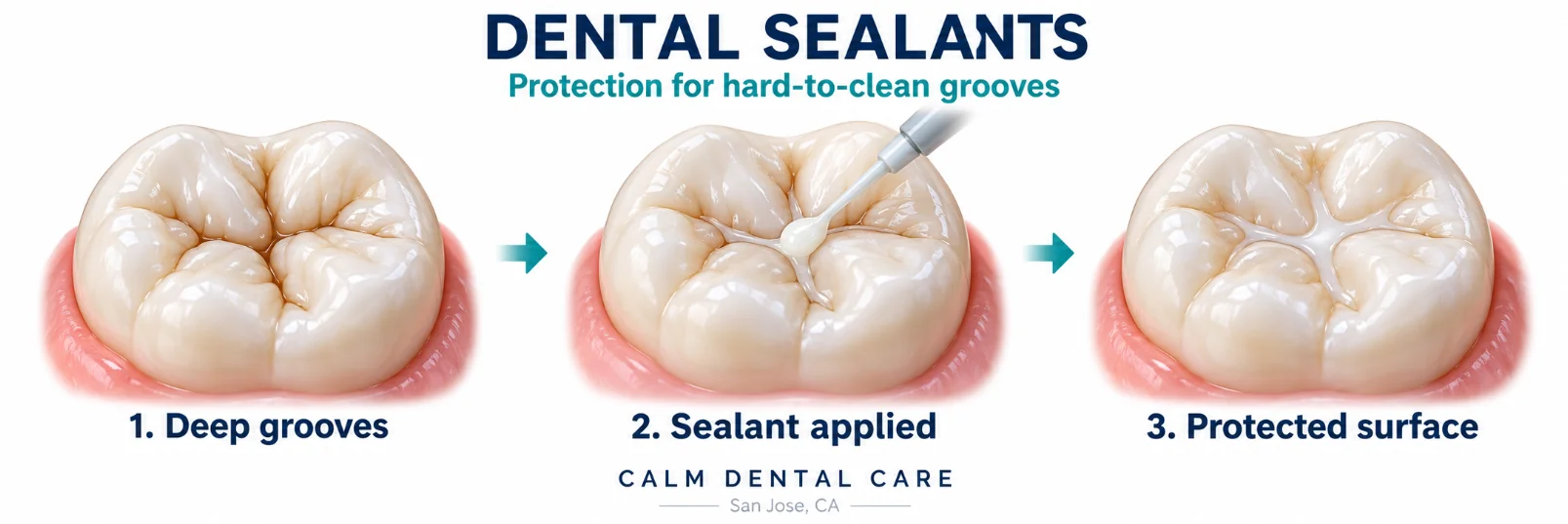
The deep grooves in back teeth can trap food and plaque, making them difficult to clean thoroughly. Dental sealants are thin protective coatings applied to these chewing surfaces to help prevent cavities. They are especially useful for children and teenagers, although some adults may benefit too.
Placement is quick and generally requires no drilling or numbing. Dr. Douglas R. Maxson can evaluate whether sealants are appropriate for your teeth. Sealants complement daily brushing, flossing, and regular dental visits.
Your gums and your overall health are connected
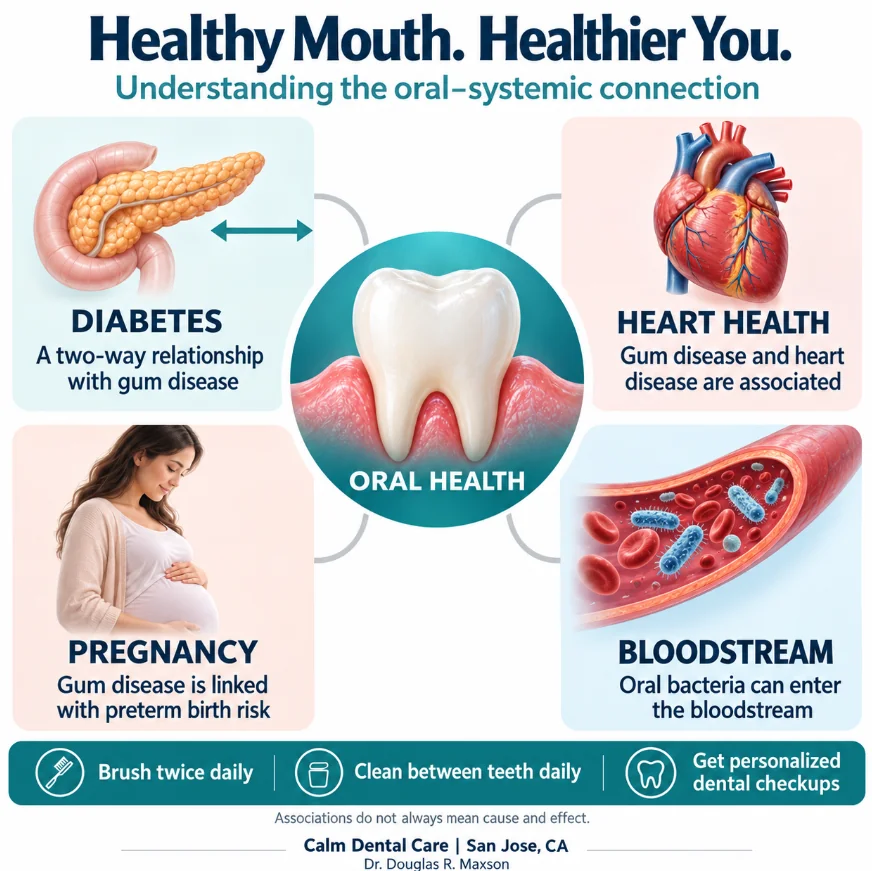
Your mouth is part of your body. Gum health deserves particular attention when you have diabetes, are pregnant, or have other medical conditions.
Diabetes: High blood sugar can increase susceptibility to gum disease and slow healing. The relationship also works in the other direction: periodontal disease may make blood sugar harder to control. Tell us about your diabetes, medications, and recent changes in your health. NIH: Diabetes and Oral Health
Bacteria in the bloodstream: Oral bacteria can enter the bloodstream during everyday activities, including chewing and brushing, particularly when gums are inflamed. This does not mean brushing is harmful; maintaining healthy gums remains essential. Tell us if you have a heart condition or have been advised to take antibiotics before certain dental procedures. ADA: Oral–Systemic Health
Pregnancy and premature birth: Periodontal disease has been associated with preterm birth and low birth weight. An association does not establish that gum disease causes these outcomes, and periodontal treatment has not been proven to prevent premature delivery. Preventive dental care and necessary treatment are generally safe during pregnancy. ADA: Pregnancy and Oral Health
Do you need checkups every six months?
Many patients benefit from cleanings and examinations every six months, but your schedule should reflect your individual needs. A history of periodontal disease, diabetes, smoking, dry mouth, or difficulty controlling plaque may justify more frequent visits.
After periodontal treatment, maintenance appointments are often recommended every three to four months. Dr. Maxson will recommend an interval based on your findings and risk factors.
Frequently asked questions
Should I wait until my gums hurt?
No. Gum disease can progress without significant pain. Bleeding, persistent bad breath, recession, or loose teeth warrant evaluation.
Can mouthwash replace flossing?
No. Mouthwash may supplement your routine, but it does not replace brushing and cleaning between teeth.
Ready to protect your smile?
Call Calm Dental Care at (408) 996-0176 to schedule preventive dental care with Dr. Douglas R. Maxson in San Jose, CA.
Medical references
Related Care
Ready to feel calm about dentistry?
Call our San Jose office or request an appointment online — we will take care of the rest.