Dental Crowns and Bridges in San Jose, CA
Dental crowns are custom-made caps that fit over a damaged, weakened, or heavily restored tooth to rebuild its strength, shape, and natural appearance. At Calm Dental Care in San Jose, CA, Dr. Douglas R. Maxson designs crowns that protect the healthy tooth beneath while restoring comfortable, everyday function — so you can bite, chew, and smile with confidence. To find out whether a crown is right for you, call 408-996-0176 to schedule an evaluation.
By Dr. Douglas R. Maxson, DDS · Clinically reviewed by Dr. Douglas R. Maxson, DDS · Last updated October 1, 2026
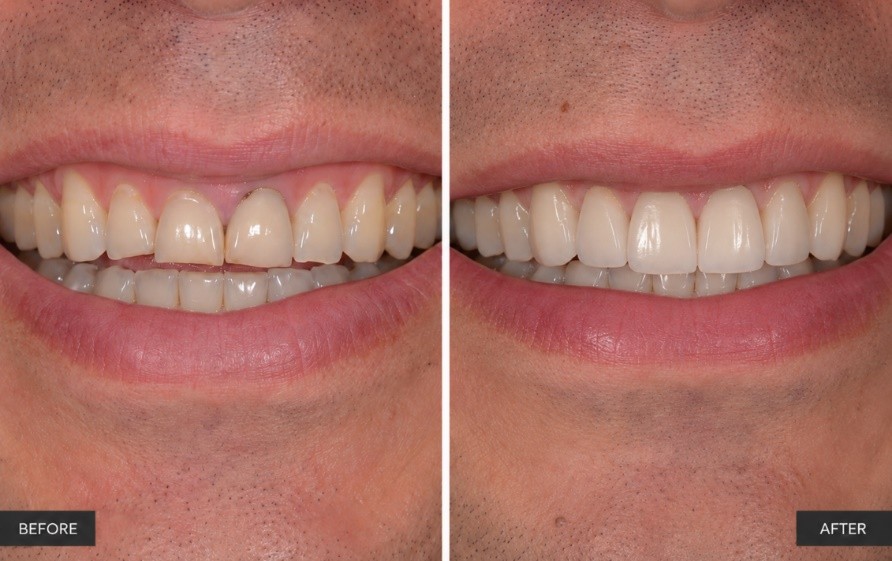
Quick Answers
- What it is
- A tooth-shaped cap that covers a damaged tooth above the gumline to restore its strength and appearance.
- Who it helps
- People with a cracked, worn, or decayed tooth, a large failing filling, or a tooth that has had a root canal.
- Timeline
- A traditional crown usually takes two visits, typically about two weeks apart, with a temporary crown in between.
- Comfort
- The tooth is numbed with local anesthesia; most people feel little or nothing during treatment.
- Materials
- Porcelain, ceramic, zirconia, porcelain-fused-to-metal, and gold alloy — chosen by tooth location and bite.
- Cost factors
- Material, number of crowns, and your insurance may all affect price — ask the office for details.
- Next step
- Call 408-996-0176 to schedule an evaluation with Dr. Maxson.
What Is a Dental Crown?
A dental crown is a custom-made cap that fits over the entire visible part of a tooth, restoring its shape, strength, and appearance while preserving the healthy root beneath. Rather than removing the tooth, a crown rebuilds the compromised surface above the gumline. Think of it as repairing the surface of a tooth without disturbing its foundation.
Crowns are placed for two main reasons: to rebuild a tooth that no longer has enough healthy structure to stay strong on its own, and to improve the look of a tooth. Sometimes both. Modern crowns are made from tooth-colored materials — porcelain, ceramic, and zirconia — matched to the shade and contour of neighboring teeth, so a well-made crown blends in and functions like a natural tooth. Crowns are also a key part of cosmetic dentistry in San Jose. For smaller repairs, see composite fillings.
Signs You May Need a Crown
A crown may be the right choice if you are dealing with any of the following:
- Severe decay that is too large for a standard filling
- A cracked, fractured, or broken tooth
- A tooth weakened by a large, failing filling that no longer supports it
- A tooth that has had root canal treatment and needs protection
- Noticeable wear from grinding or clenching
- A discolored or misshapen front tooth you would like to restore
If any of this sounds familiar, Dr. Maxson can examine the tooth, take any needed images, and walk you through your options so you can make an informed decision.
Choosing the Right Crown Material
The best material depends on where the tooth sits, how much chewing force it handles, and how visible it is when you smile. Dr. Maxson will help you weigh the trade-offs:
| Material | Best suited for | Strengths | Things to consider |
|---|---|---|---|
| Zirconia | Back teeth; grinders and clenchers; also usable in front | Very strong and tooth-colored | Slightly less translucent than layered porcelain in the front |
| Layered porcelain / ceramic | Front teeth and high-visibility areas | The most natural, lifelike look | Not ideal for heavy grinders; porcelain can chip |
| Porcelain fused to metal | Front or back teeth needing added strength | Strong metal core with a tooth-colored surface | Porcelain can chip from the metal; a dark line may show if gums recede over time |
| Gold alloy | Non-visible back teeth | Extremely durable, gentle on opposing teeth, needs the least tooth removal | Metallic color; higher material cost |
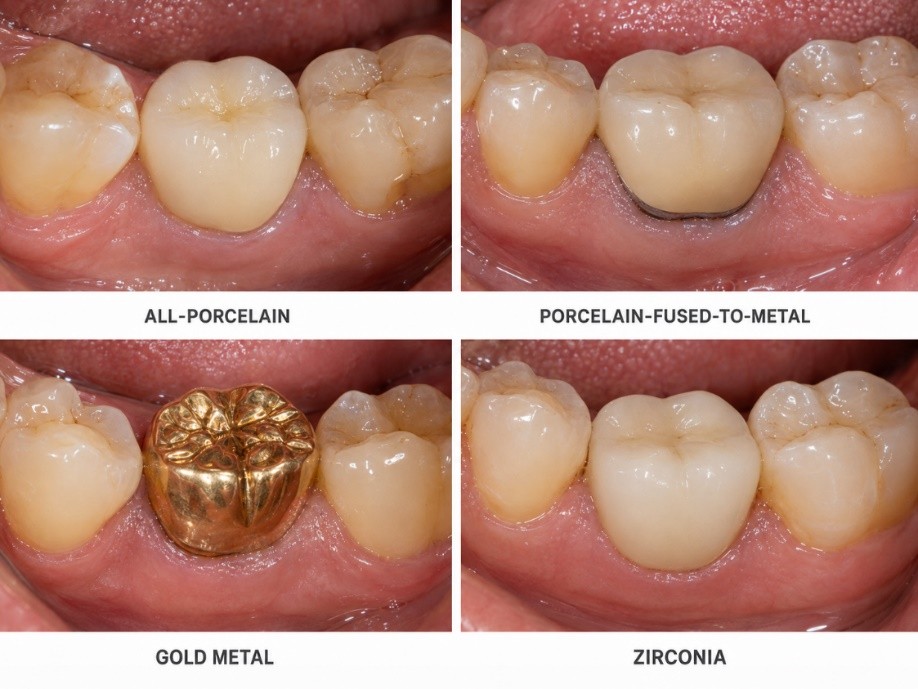
During your consultation, Dr. Maxson explains the advantages of each option for your specific tooth, so the final choice fits both your bite and your appearance goals.
The Dental Crown Procedure: What to Expect
Getting a crown is a straightforward process. Dr. Maxson takes a careful, step-by-step approach so the restoration fits precisely and feels natural.
Step 1: Exam and Planning
Dr. Maxson examines the tooth, takes X-rays and, when helpful, a scan or impression, and confirms that a crown is the right treatment. You will review the material options together before moving forward.
Step 2: Preparing the Tooth
The area is numbed with local anesthesia. Dr. Maxson gently reshapes the tooth to make room for the crown, removing only what is needed. If a large amount of structure is missing, he first builds up a stable core to support the crown.
Step 3: Impression and Temporary Crown
A physical mold or a digital scan of the prepared tooth and your bite is sent to a dental laboratory, where your permanent crown is custom-made. A temporary crown protects the tooth and keeps your bite aligned in the meantime.
Step 4: Placing the Final Crown
At your next visit, the temporary is removed and the permanent crown is tried in. Dr. Maxson checks the fit, shade, and bite, makes any adjustments, and cements the crown in place — leaving you with a fully restored tooth.
Will Getting a Crown Hurt? Comfort and Recovery
The crown procedure is performed under local anesthesia, so the tooth is numb and most people feel little or nothing during treatment. Afterward, mild sensitivity or tenderness for a few days is normal and usually fades on its own. Your temporary crown keeps the tooth comfortable between visits.
Most patients return to normal eating and daily activities the same day. If dental visits make you anxious, ask about our sedation dentistry options to help you stay relaxed during longer appointments.
How Long Do Dental Crowns Last?
According to the Cleveland Clinic, with good care, a well-made crown often lasts 5 to 15 years, and many last longer. Lifespan depends on the material, where the tooth sits in your mouth, and how well you care for it at home. To help your crown last:
- Brush twice a day with fluoride toothpaste
- Floss daily, paying attention to the gumline around the crown
- Avoid chewing ice, hard candy, and other hard objects
- Wear a nightguard if you grind or clench your teeth
- Keep up with regular checkups and cleanings
A crown does not make the tooth cavity-proof — decay can still form where the crown meets the tooth if plaque builds up, so daily cleaning at the gumline matters.
What About Dental Bridges?
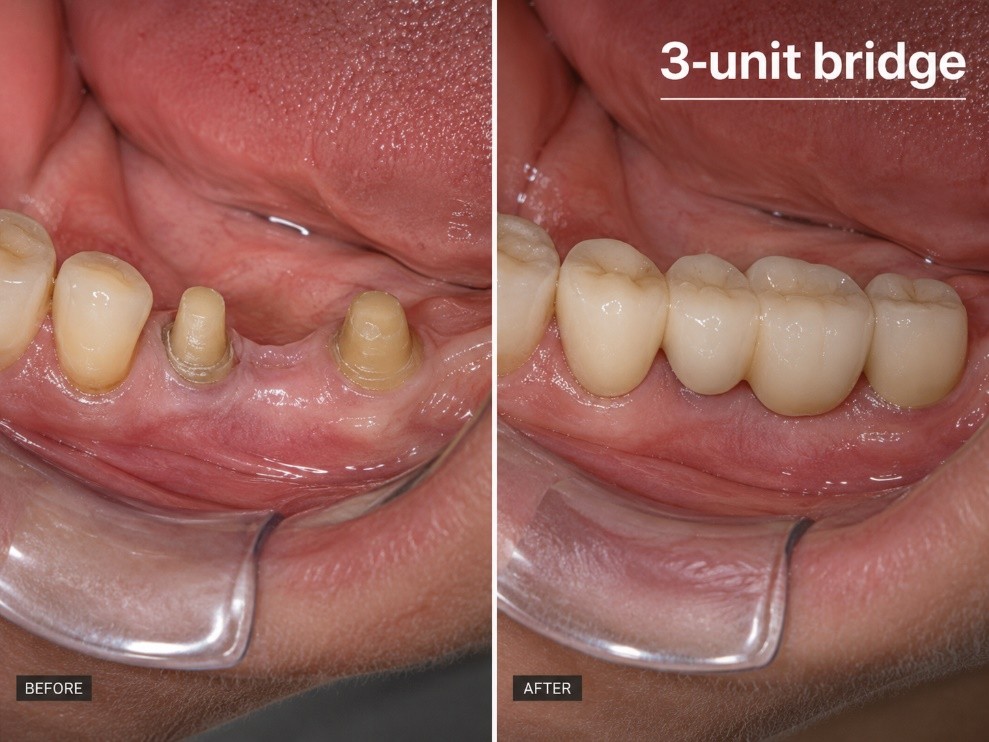
When a tooth is missing entirely, a bridge uses crowns to fill the gap. Crowns are placed on the healthy teeth on each side of the space (the abutments) to support a replacement tooth (the pontic) in the middle. A bridge restores chewing and keeps neighboring teeth from drifting out of position.
In many cases, a single implant is a longer-lasting way to replace one missing tooth, because it does not require reshaping the healthy neighbors. Learn more about dental implants in San Jose. Dr. Maxson will review whether a bridge or an implant is the better fit for your situation.
Cost and Insurance
The cost of a crown depends on the material, how many crowns you need, and whether any additional treatment — such as a root canal or core buildup — is required. Many dental insurance plans cover part of the cost when a crown is medically necessary, for example after a fracture, large area of decay, or root canal, though coverage varies by plan. Our team is glad to help you understand your benefits before treatment begins — see our financial and insurance information.
Why Choose Calm Dental Care for Your Crown?
- Experienced restorative care. Dr. Douglas R. Maxson has 40+ years of experience restoring teeth for San Jose patients.
- Precise fit and bite. Careful attention to how the crown meets your bite, so it feels natural and wears evenly over time.
- Comfort-focused visits. Local anesthesia for the procedure, with sedation available for anxious patients.
- Tooth-colored materials. Porcelain, ceramic, and zirconia crowns matched to your smile.
- Convenient West San Jose location. On S. De Anza Blvd, serving San Jose and nearby communities such as Cupertino, Sunnyvale, Campbell, and Santa Clara.
Frequently Asked Questions
Does getting a dental crown hurt?
The tooth is numbed with local anesthesia, so most people feel little or nothing during treatment. Mild sensitivity or tenderness for a few days afterward is normal and usually fades on its own. Most patients find the visit far easier than they expected.
How many visits does a crown take?
A traditional crown usually takes two visits, typically about two weeks apart. At the first visit Dr. Maxson prepares the tooth, takes an impression or scan, and places a temporary crown. At the second visit the permanent crown is fitted, adjusted, and cemented in place.
Will my crown look natural?
Yes. Porcelain, ceramic, and zirconia crowns are color-matched to your neighboring teeth, and Dr. Maxson pays close attention to shade, shape, and contour so the crown blends in. Most people cannot tell a well-made crown from a natural tooth.
How do I take care of a crown?
Care for it like a natural tooth: brush twice a day, floss daily around the gumline, and keep up with regular checkups. Avoid biting hard objects such as ice or hard candy, and ask about a nightguard if you grind or clench your teeth.
Can you still get a cavity under a crown?
Yes. A crown protects the tooth, but the tooth can still decay where the crown meets the natural tooth if plaque is allowed to build up. Daily brushing and flossing at the gumline are what keep a crowned tooth healthy.
Do I always need a crown after a root canal?
Often, yes, especially for back teeth. A tooth can become more brittle after a root canal, and a crown protects the remaining structure from cracking. Dr. Maxson will tell you whether your treated tooth needs the added protection.
Is a filling or veneer ever an option instead of a crown?
Sometimes. A large filling may be enough when plenty of healthy tooth remains, and a veneer can address the front surface of a tooth in select cosmetic cases. In heavy-chewing areas, a crown is often the more durable, longer-lasting choice.
Does insurance cover crowns?
Many dental plans cover part of the cost when a crown is medically necessary, such as after a fracture, large area of decay, or root canal. Coverage varies by plan — our team can help you check your benefits before treatment.
How long do dental crowns last?
With good home care, crowns often last 5 to 15 years and sometimes longer, depending on the material used, where the tooth sits in your mouth, and how well you care for it. Regular checkups help your dentist catch small problems early.
Ready to protect your tooth?
Schedule a crown evaluation with Dr. Maxson today. Not sure you need a crown? Ask a question or schedule an appointment and we'll call you back.
Cracked or broken tooth and in pain? Call 408-996-0176 today — a fractured tooth is often easier to save when treated promptly.