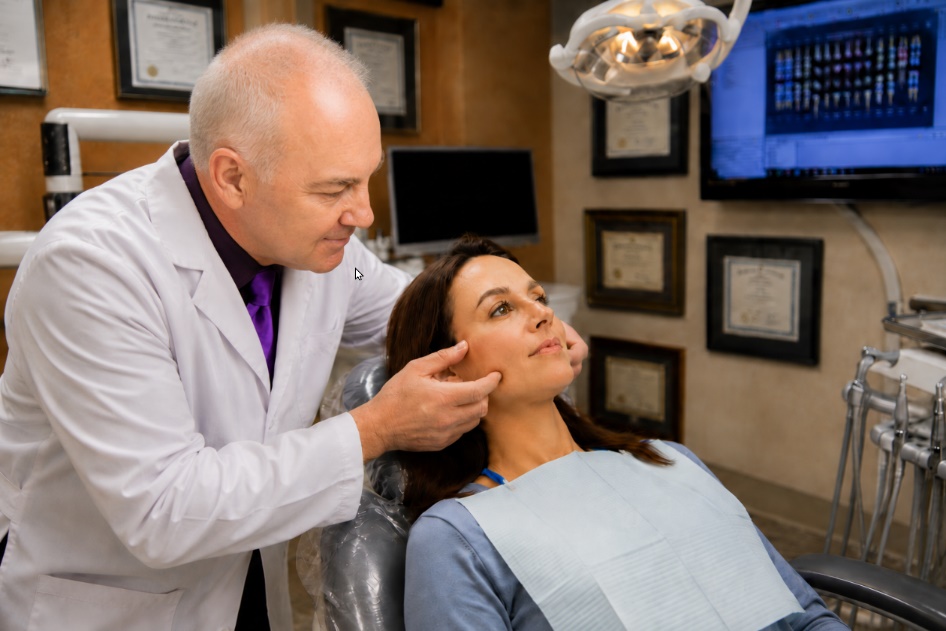
What Is a TMJ Disorder?
Your temporomandibular joints sit just in front of each ear and connect your lower jaw to your skull. They’re unusual joints — they move front to back, side to side, and up and down — which is what lets you chew, speak, and yawn. When these joints and the muscles around them stop working smoothly, the result is a TMJ disorder, also called TMD.
Because the joints sit so close to the ears and to major nerves and muscles of the head and neck, TMJ problems can show up in places you might not connect to your jaw — from headaches to ear ringing. That’s part of why they often go unrecognized.
What Are the Symptoms of a TMJ Disorder?
TMJ symptoms range from mild and occasional to severe and constant. You don’t need all of them to have a TMJ disorder. Common signs include:
- Jaw pain, soreness, or tenderness — often near the joint in front of the ears
- Headaches or migraine-like pain, sometimes worse on waking
- Clicking, popping, or grating when you open or close
- A jaw that locks or won't open or close normally (a “locked jaw”)
- Earaches, a stuffy or full feeling in the ears, or ringing (tinnitus) without an infection
- Sensitive, worn, or clashing teeth, and grinding or clenching
- Facial pain that can spread to the neck and shoulders
- Tingling in the fingers, and limited or stiff jaw movement
If your jaw is locked or biting causes severe pain, don’t wait — call (408) 996-0176 so we can help relieve the flare-up.
What Causes TMJ Problems?
In many cases, the pain comes from muscles in the head and neck that are locked in spasm. Those muscles tighten when the lower jaw’s closing position and the way the teeth meet aren’t in harmony — the teeth “clash” on biting, and the muscles work overtime. When the jaw position and the bite are brought back into harmony, the muscles can relax, come out of spasm, and the pain often eases.
TMJ disorders rarely have a single cause. Contributing factors can include:
- Teeth grinding or clenching (bruxism), often during sleep
- A bite where the teeth don't meet evenly (malocclusion) or a misaligned jaw position
- Jaw injury or trauma
- Arthritis or changes within the joint, including a displaced disc
- Chronic stress and muscle tension, and habits like heavy gum chewing
Deep inside each joint is a small collagen disc that cushions the jaw. In TMJ disorders this disc is often shifted out of position, which is one reason clicking and pain develop — and a key thing Dr. Maxson evaluates.
How Dr. Maxson Diagnoses TMJ Disorders
Good treatment starts with a clear diagnosis. Dr. Maxson examines your jaw joints, muscles, and bite, reviews your symptom history, and — when it will add useful information — uses imaging such as X-rays. Because everyday medical issues can mimic TMJ, part of the evaluation is confirming that your symptoms point to the jaw rather than another cause. More detailed diagnostic records may be recommended if symptoms persist.
TMJ Treatment Options at Calm Dental Care
Dr. Maxson favors the least invasive treatment that can do the job, and only moves to more involved care when it’s genuinely needed. Treatment is matched to the severity of your symptoms.
Nightguards and Oral Appliances
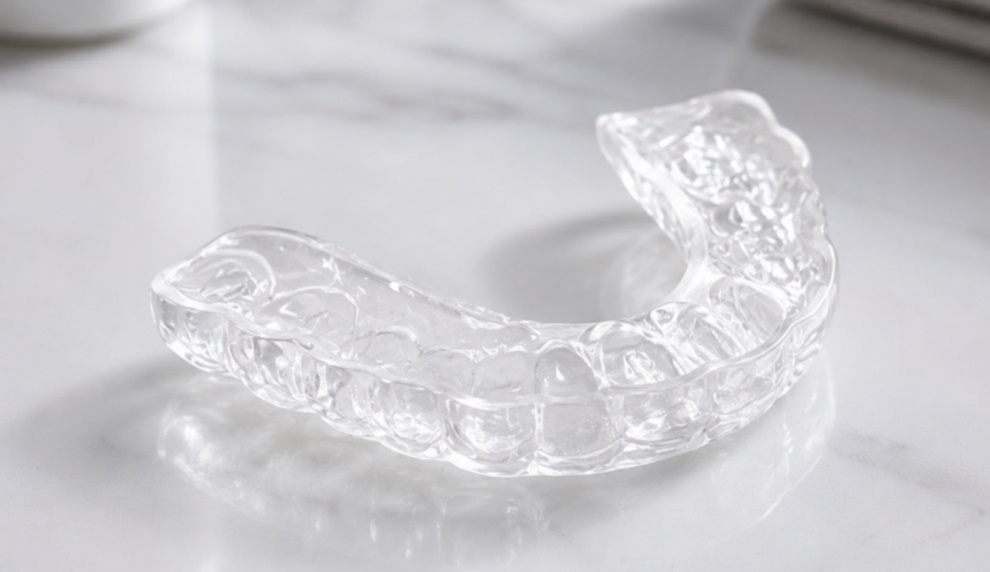
For many patients, a custom nightguard worn during sleep prevents the nighttime clenching that drives symptoms, and can bring meaningful relief on its own. There are several options, and Dr. Maxson helps you choose based on your bite and your symptoms:
- A simple full-coverage nightguard worn at night to stop nighttime clenching.
- A NiTi front-coverage appliance that covers only the front teeth — less bulky than a full-coverage guard.
- A full-coverage guard made of soft material, hard acrylic, or hard acrylic with a soft inner layer against the teeth.
If symptoms are acute and simply trying to bite is painful, wearing a full-coverage nightguard full-time can serve as a temporary way to calm things down.
| Appliance | What it is | Often used for |
|---|---|---|
| Simple nightguard | A custom full-coverage guard worn at night | Nighttime clenching and grinding; milder or early symptoms |
| NiTi front-coverage appliance | A smaller appliance over the front teeth only, less bulky than a full guard | Patients who prefer a lower-profile night appliance |
| Full-coverage guard (soft / hard / hybrid) | Soft, hard acrylic, or hard-with-soft-lining full guard | Protecting teeth and easing muscle strain based on your bite |
| Orthopedic repositioning appliance | A lower-jaw appliance that guides the jaw slightly forward | Persistent symptoms; also serves as a ~6-month diagnostic trial |
| NTI-tss Plus™ | A small, clear appliance covering only the front teeth, keeping the canines and back teeth apart | FDA-approved migraine prevention; intense nighttime clenching |
NTI-tss Plus™ for Migraine Prevention
If you suffer from migraine headaches, tell us — especially if they’re worst in the morning. More than 29 million Americans experience migraines, and for many of them the trigger is nighttime clenching. The NTI-tss Plus™ is an FDA-approved migraine prevention option: a small, clear nightguard that comfortably fits over just your front teeth, keeping the canines and back teeth slightly apart. That separation minimizes the intensity of nighttime clenching forces by nearly 70%, which prevents the hyperactive nerve response behind migraine and tension-type headaches.
In its clinical trial, 82% of NTI-tss users experienced a 77% reduction in migraine events — with no medical side effects. Originally developed to prevent migraine pain, it has proven a superior alternative to full-coverage bite guards for many patients, because a full-coverage guard can actually give some people an ideal clenching surface and increase clenching activity. The NTI-tss Plus™ takes the opposite approach: less appliance, less clenching.
It’s also simply easier to live with. The NTI-tss Plus™ is smaller and less bulky than a traditional guard, doesn’t trigger a gag reflex the way some appliances can, and is custom-fabricated for either your upper or lower teeth using a safe, non-toxic thermoplastic that contains no Bisphenol A (BPA). Because it’s comfortable, our patients actually wear it — which is the whole point.

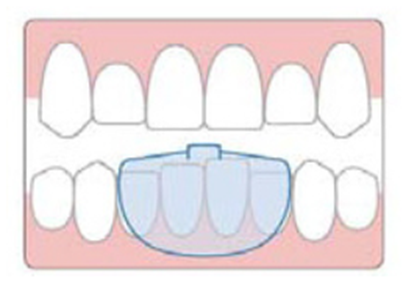
You can feel the difference yourself: touch your temples while biting hard on a pencil with your back teeth — the muscles bulge. Now bite with only your front teeth: those same muscles stay relaxed. That reduced muscle intensity is what calms migraines. Some insurance plans cover the NTI-tss Plus™; check with your dental and medical insurers, and ask us — we’re happy to discuss whether it’s right for you.
TENS Muscle Therapy
Transcutaneous electrical nerve stimulation (TENS) delivers gentle electrical impulses to the muscles that open and close your jaw, helping them relax. It can be done in the office, and a personal TENS unit can be used at home as well. Many patients find it a comfortable, quick way to ease muscle tension.
Physical Therapy and Self-Care
Early in treatment, a referral to a physical therapist experienced in the neck and upper spine is standard, because jaw, neck, and posture problems are closely linked. At home, warm or cold compresses, gentle jaw stretches, avoiding hard or chewy foods, and stress-reduction techniques can all help calm symptoms.
Bite (Occlusal) Adjustment
In some cases, carefully adjusting teeth that clash when you bite relieves strain on the muscles and joints. It’s a conservative step used when the way your teeth meet is clearly part of the problem.
Orthopedic Repositioning Appliance
When symptoms persist, Dr. Maxson may use an orthopedic repositioning appliance on the lower jaw. It changes how the jaws and teeth relate by holding the jaw in a slightly more forward position, which takes pressure off the condyles — the parts of the jaw you can feel move when you place your fingers just below your ears and open and close.
Relieving that pressure gives the displaced disc inside the joint a chance to settle into a healthier position. This appliance is both a treatment and a diagnostic tool: it’s usually worn for about six months to see how you respond. Most patients do better with the jaw supported this way; a few don’t, in which case the appliance is removed. If you feel significant improvement after that trial, the next step is to make the bite match that healthier jaw position long-term — using orthodontics to align the bite, ceramic crowns, or a combination of the two.
Pure Power Mouthguard for Athletes
The Pure Power Mouthguard (PPM) is a specialized, performance-enhancing athletic appliance designed using neuromuscular dentistry principles to align the jaw, reduce muscle tension, and unlock an athlete’s physical potential. Unlike basic boil-and-bite options meant solely for tooth protection, the PPM is custom-engineered to optimize your bite — which inherently stabilizes your spine and core mechanics. Athletes who wear it have reported increased strength, range of motion, flexibility, and balance, and it’s great for athletes and non-athletes alike.
See how the Pure Power Mouthguard works
What About Surgery and Medication?
A few honest points Dr. Maxson shares with every TMJ patient:
- No medication cures a TMJ disorder. Taking pain pills of any kind over a long stretch isn't advised — it can cause other health problems and, in some cases, dependence.
- For the disc-and-joint (condyle) changes seen in advanced TMJ, surgery has not proven to be a dependable fix, which is why care focuses on relieving pressure on the joint and helping it recover when possible.
- If a case ever calls for care beyond conservative dentistry, we help coordinate the right referral.
- If a displaced disc is ignored, advanced TMJ can wear through the disc that cushions the joint, leading to bone-on-bone contact when you open and close. Catching problems earlier is one of the best reasons not to put off an evaluation.
What Results Can You Expect?
Every case is different. For many patients, conservative treatment brings real relief — less pain, easier chewing and speaking, and better sleep. In some cases, it may not be possible to erase every symptom; the realistic goal is to reduce symptoms to a level that feels comfortable and manageable. After your evaluation, Dr. Maxson will give you an honest picture of what your treatment can and can’t achieve.
Ready to Feel Better?
Schedule a TMJ evaluation
Call Calm Dental Care in San Jose at (408) 996-0176 to have your jaw pain, clicking, or headaches evaluated by Dr. Maxson.
ScheduleNot sure it’s TMJ?
If you’re not certain your symptoms are jaw-related, call and ask — our team is glad to help you decide whether an evaluation makes sense.
Ask a QuestionLocked jaw or severe pain?
Don’t wait it out. Call (408) 996-0176 right away so we can help relieve an acute flare-up.
Call (408) 996-0176TMJ Treatment FAQs
What is a TMJ disorder?
+
A TMJ disorder (also called TMD) is a problem with the temporomandibular joints and the muscles that move your jaw. These joints sit just in front of each ear and let you talk, chew, and yawn. When the joints and muscles don't work in harmony, you can get jaw pain, clicking, headaches, and other symptoms.
What causes TMJ problems?
+
There is often more than one cause. Common contributors include teeth grinding or clenching, a bite where the teeth don't meet evenly, stress and muscle tension, jaw injury, and changes inside the joint itself. Dr. Maxson looks at how your teeth come together and how your lower jaw is positioned, because those relationships drive many TMJ symptoms.
How do I know if I should see a dentist about my jaw?
+
Consider an evaluation if you have jaw pain, clicking or popping, a jaw that locks or won't open fully, frequent headaches, or ear pain and ringing that home care doesn't relieve. Early evaluation often means simpler, more conservative treatment.
Can a TMJ disorder go away on its own?
+
Mild cases sometimes settle with rest, softer foods, and stress management. Persistent or worsening symptoms usually need professional care, because untreated TMJ problems can lead to more joint strain and tooth wear over time.
How is a TMJ disorder diagnosed?
+
Diagnosis starts with a clinical exam of your jaw joints, muscles, and bite, along with your symptom history. Imaging such as X-rays may be used when it will add useful information. The goal is to understand what's driving your symptoms before starting treatment.
Is TMJ treatment painful?
+
The conservative treatments used first — custom nightguards, TENS muscle therapy, bite adjustment, and physical therapy — are non-invasive and meant to reduce pain, not add to it. Most patients notice gradual relief as treatment progresses.
Can a TMJ disorder damage my teeth?
+
It can. Ongoing clenching and grinding can wear, crack, or loosen teeth and throw the bite further out of balance. Treating the underlying jaw problem helps protect your teeth as well as relieve symptoms.
How long does TMJ treatment take?
+
It depends on the cause and severity. Some patients feel relief within days of starting appliance therapy. When an orthopedic repositioning appliance is used, it is typically worn for about six months so its effect can be evaluated before any longer-term step is considered. Dr. Maxson will give you a realistic timeline after your evaluation.
Does insurance cover TMJ treatment?
+
TMJ treatment is usually not a covered dental benefit. In severe cases, however, medical insurance may be involved to help cover it. Our team can help you understand your options before you begin.
Can TMJ treatment help with migraines?
+
It often can. For patients whose migraines are driven by nighttime clenching, Dr. Maxson offers the FDA-approved NTI-tss Plus™ migraine prevention appliance. In its clinical trial, 82% of users experienced a 77% reduction in migraine events, with no medical side effects. If you suffer from migraines, be sure to tell us — it may be a viable option for you.
Why Choose Dr. Maxson for TMJ Treatment?
Dr. Douglas Maxson has extensive postgraduate training in the diagnosis and treatment of TMJ disorders and 40+ years of experience helping patients with jaw pain and bite problems.
- Conservative and reversible first. Dr. Maxson starts with the least invasive options that can be adjusted or reversed, and only moves to more involved treatment when it’s truly needed.
- Whole-system thinking. Because TMJ symptoms tie together the teeth, bite, muscles, and joints, treatment is planned around how your entire chewing system works — not just one sore spot.
- Honest expectations. He’ll tell you what conservative care can realistically achieve, is cautious about long-term pain medication, and won’t recommend permanent treatment before a diagnostic appliance shows it will help.
- Care coordinated close to home. In-office and at-home TENS therapy and physical-therapy referrals are part of the plan when they’ll help — all from a familiar San Jose office.
Calm Dental Care · 1198 S. De Anza Blvd, San Jose, CA 95129 · (408) 996-0176
Author: Dr. Douglas Maxson, DDS — Calm Dental Care, San Jose, CA · Clinically reviewed by: Dr. Douglas Maxson, DDS · Last updated: October 1, 2026