What Is Orthodontics?
Orthodontics is the area of dentistry focused on guiding teeth into healthier positions and improving how the upper and lower teeth fit together. Treatment may be recommended for crowded or rotated teeth, spaces between teeth, teeth that have shifted after previous orthodontic care, or bite concerns such as an overbite, underbite, crossbite, open bite, or deep bite.
Some alignment problems are mainly cosmetic. Others can make certain areas hard to clean, contribute to uneven tooth wear, or place added stress on teeth and jaw muscles. A personalized evaluation is the best way to determine which issues matter clinically and which treatment options are appropriate.
Why Patients Consider Orthodontic Treatment
- A more even, confident smile
- Teeth that are easier to brush and floss
- Improved bite balance and chewing function
- Fewer areas where plaque and food collect
- Correction of crowding, spacing, rotations, or relapse
- Protection from uneven wear caused by certain bite problems
Your Orthodontic Options at Calm Dental Care
Traditional Metal Braces
Metal braces use small brackets and an archwire to apply gentle, carefully directed pressure. They are durable, dependable, and can manage many types of tooth movement, including more complicated crowding and bite corrections. Because braces stay attached to the teeth, treatment does not depend on remembering to wear removable trays.
Learn more: metal and clear braces in San Jose.
Clear or Ceramic Braces
Clear braces work with brackets and wires like traditional braces, but the brackets are tooth-colored or translucent. They can be a good middle-ground option for older teens and adults who want the control of fixed braces with a less noticeable appearance.
Clear Aligners and Invisalign
Clear aligners use a series of removable, custom-made trays to move teeth in planned stages. Invisalign and other professionally supervised aligner systems can appeal to adults and responsible teens because the trays are discreet, removable for meals, and allow normal brushing and flossing.
Calm Dental Care also offers ProMonitoring-supported treatment when appropriate. With this technology, patients submit guided images from a smartphone so the dental team can review aligner fit and progress between office visits. Remote monitoring does not replace professional care; it adds another layer of communication and oversight.
Learn more: clear aligners and Invisalign in San Jose.
Braces or Clear Aligners: Which Is Better?
Neither treatment is automatically better. The right answer depends on the movements your teeth require, the condition of your gums and supporting bone, your age, your bite, and how consistently you can follow instructions. Braces may offer greater control for complex movements and do not rely on daily wear compliance. Aligners offer discretion, easier hygiene, and fewer food restrictions, but they must usually be worn about 20 to 22 hours each day.
What to Expect During Orthodontic Treatment
- Consultation and examination: Dr. Maxson evaluates your teeth, gums, bite, jaw relationships, and treatment goals.
- Digital records: Photos, digital scans, and — when clinically indicated — 3D cone-beam imaging help create an accurate plan.
- Treatment recommendation: You receive a clear explanation of suitable options, estimated timing, responsibilities, and fees.
- Active treatment: Braces are adjusted periodically, or aligners are changed on the prescribed schedule.
- Progress monitoring: In-office exams and, for selected aligner cases, remote monitoring keep treatment on track.
- Retention: Retainers help protect the result after active tooth movement is complete.
Common Orthodontic Issues We Treat
Overjet. Overjet describes the horizontal distance between the upper and lower front teeth. When that spacing is excessive or insufficient, biting, chewing, and overall dental function may be affected.
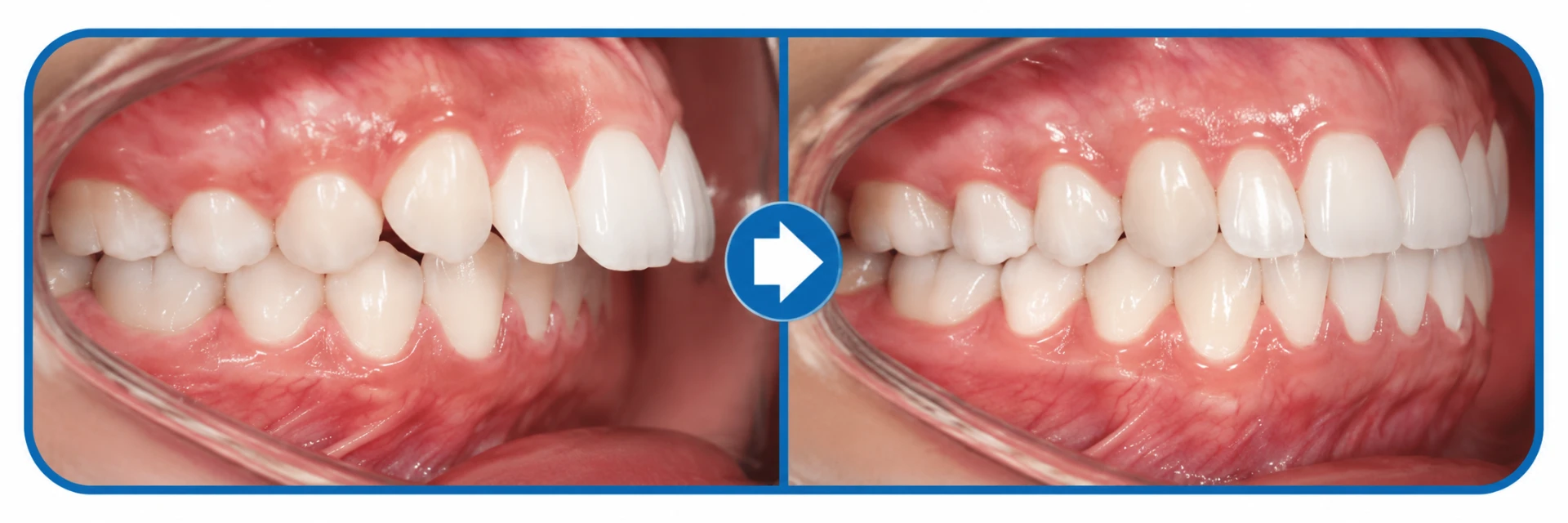
Overbite. Overbite describes how far the upper front teeth vertically overlap the lower front teeth. Too much overlap can interfere with comfortable biting and make some foods harder to tear.
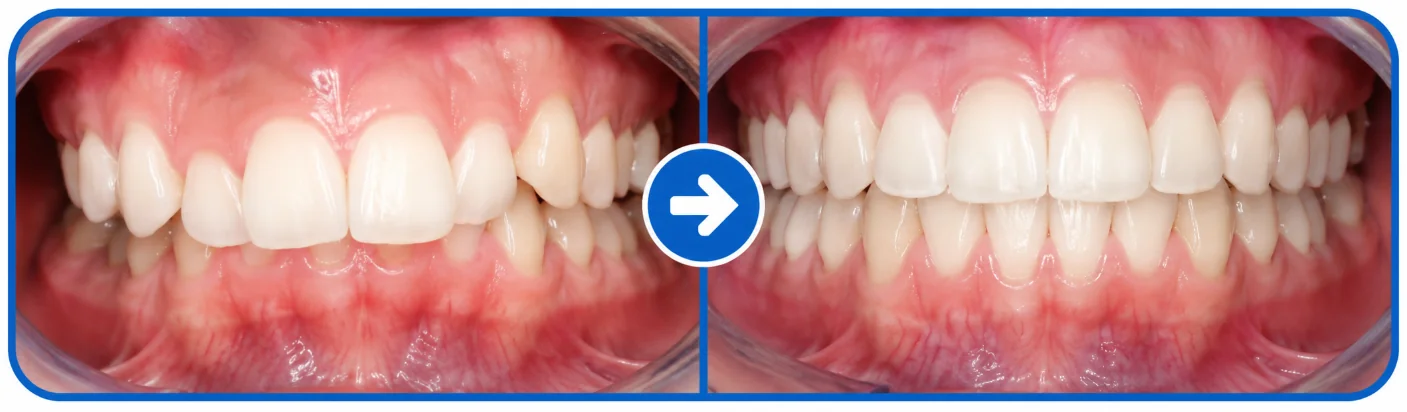
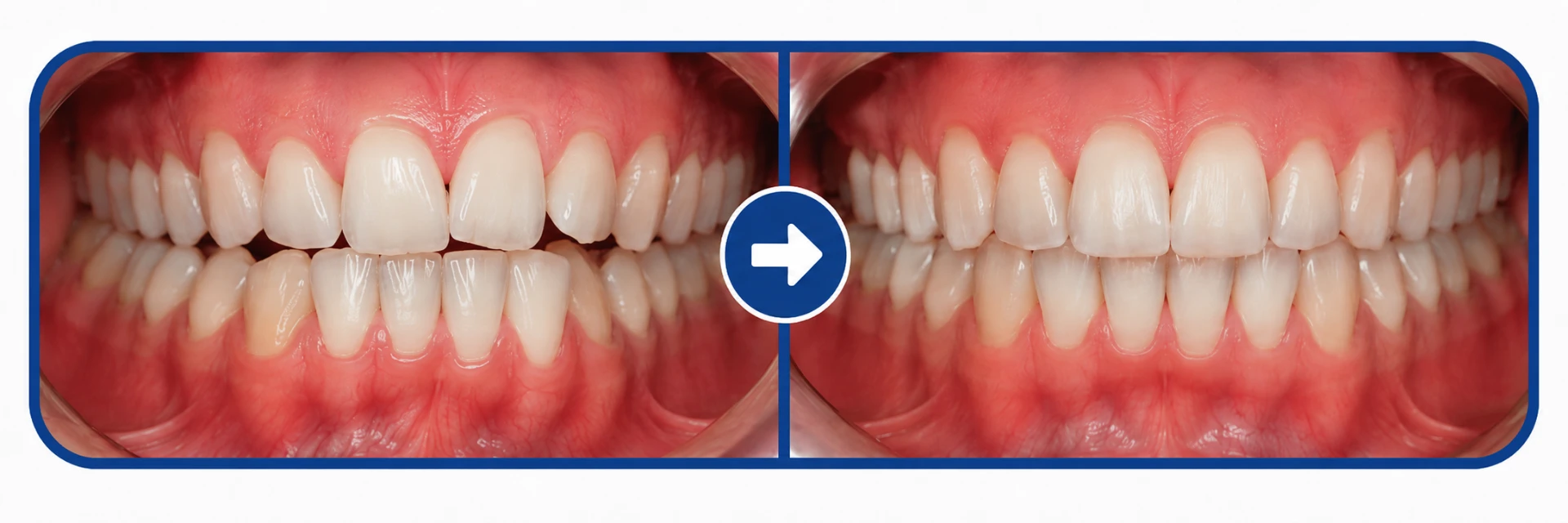
Midline misalignment. Midline misalignment occurs when the centers of the upper and lower teeth do not line up. Mild cases may not affect function, but correction can create a more balanced, symmetrical smile.
Orthodontics for Teens and Adults
Teenagers often benefit from treatment while the teeth and jaws are still developing, but orthodontics is not limited to adolescents. Many adults choose treatment before a wedding, a career change, or restorative dentistry — or simply because they are finally ready to improve a smile that has bothered them for years. Healthy teeth can often be moved at almost any age, though adult care may require additional coordination with gum, restorative, or implant treatment.
How Much Does Orthodontic Treatment Cost?
The cost depends on the type of appliance, the length and complexity of treatment, and what is included in the plan. Fee ranges are shown on each treatment page — see metal and clear braces in San Jose and clear aligners and Invisalign in San Jose — so you always see current, consistent pricing in one place.
The office can review your orthodontic insurance benefits before treatment begins, and payment plans and in-office financing are available (see our Financial Policies page).
A Final Word from Dr. Maxson
“Whenever possible, I strive to create adequate space and avoid unnecessary tooth removal — because successful orthodontic treatment should do more than straighten teeth. It should support a balanced facial profile, a natural smile, and lasting confidence. One of the greatest rewards of my career has been watching patients become more outgoing and self-assured as their smiles — and sometimes their lives — are transformed.”
Frequently Asked Questions About Orthodontics
Is it ever too late to get orthodontic treatment?
No. Healthy teeth can often be moved at almost any age. Adult treatment may simply require closer coordination with gum, restorative, or implant care.
How do I choose between braces and clear aligners?
It depends on the movements your teeth need, your bite, the health of your gums and bone, and how consistently you can wear aligners. Dr. Maxson evaluates all of this and recommends the most predictable option for your case.
Does orthodontic treatment hurt?
Most patients feel pressure or tenderness for a few days after starting treatment or after an adjustment, rather than sharp pain. Soreness usually eases as your mouth adjusts.
At what age should my child first see an orthodontist?
The American Association of Orthodontists recommends an initial evaluation by about age seven, when enough permanent teeth have erupted to assess growth and bite. Early evaluation does not always mean early treatment.
Do you treat adults, or only children and teens?
Dr. Maxson treats adults, teens, and children. Many adult patients choose treatment for long-standing crowding, shifting after earlier orthodontics, or bite problems.
How much does orthodontic treatment cost in San Jose?
Cost depends on the appliance, treatment length, and case complexity. Insurance may contribute, and payment plans and in-office financing are available. See the braces and clear-aligner pages for current fee ranges.
Schedule a Complimentary Orthodontic Consultation in San Jose
The first step is not choosing braces or Invisalign from a website — it is finding out what your smile actually needs. Call (408) 996-0176 or request an appointment online and we will take care of the rest.