Sedation Dentistry in West San Jose / Near Cupertino
Comfortable, Closely Monitored Dental Care for Anxious Patients
Dental anxiety can make even a routine appointment feel overwhelming. For some patients the fear runs deep enough that care gets postponed for years — until a manageable problem becomes painful, complicated, and more expensive to treat.
At Calm Dental Care, Douglas R. Maxson, DDS, offers three levels of sedation dentistry to help patients feel calmer, more comfortable, and more in control. Nitrous oxide (laughing gas), oral sedation, and IV moderate sedation, with convenient wheelchair access for our patients. Whether you feel mildly nervous, carry a difficult dental experience from the past, struggle with a strong gag reflex, or need extensive treatment, Dr. Maxson can recommend a sedation option based on your health, your concerns, and the procedure being planned.
This is not a one-size-fits-all approach. Dr. Maxson and his team take the time to understand what makes dental care difficult for you, then identify the gentlest level of sedation that allows you to receive treatment comfortably.
Call Calm Dental Care at (408) 996-0176 to talk through your concerns and schedule a sedation consultation in San Jose.
People avoid the dentist for many different reasons:
A painful or frightening experience earlier in life
Fear of needles, injections, drills, sounds, or dental instruments
Difficulty becoming fully numb
A strong gag reflex or sensitive teeth
Embarrassment about the condition of their teeth
Anxiety about losing control
Trouble sitting still or staying comfortable through longer appointments
The need for several procedures or extensive treatment
A medical, physical, or developmental condition that makes traditional appointments difficult
Some patients worry the dental team will criticize them for waiting so long. At Calm Dental Care the objective is not to lecture you about the past. It is to help you move forward.
You will be treated with patience, dignity, and respect — regardless of how long it has been since your last dental visit.
What Is Sedation Dentistry?
Sedation dentistry uses carefully selected medication to reduce anxiety and help you stay relaxed during treatment. Depending on the option chosen, you may feel mildly at ease, pleasantly drowsy, or deeply relaxed with little memory of the appointment.
The sedation used at Calm Dental Care is different from the general anesthesia commonly associated with hospital surgery. With moderate or conscious sedation, patients continue breathing on their own and remain able to respond to verbal instruction.
Sedation calms your mind and body, but it does not replace local anesthetic. Dr. Maxson will still gently numb the area being treated, so that anxiety and physical discomfort are both addressed.
The Benefits of Sedation Dentistry
Sedation may make it possible to:
Reduce fear before and during treatment
Minimize awareness of dental sounds, sensations, and the passage of time
Make local anesthetic injections easier to tolerate
Control a strong gag reflex
Stay comfortable through a longer appointment
Complete several procedures in fewer visits
Receive implant treatment, extractions, restorative, periodontal, or cosmetic care more comfortably
Return to dental care after years of avoidance
For some patients, sedation becomes a bridge back to routine care. Dr. Maxson has observed that patients who initially need significant help managing anxiety often become comfortable with lighter sedation over time — and sometimes with no sedation at all.
Three Sedation Options at Calm Dental Care
Dr. Maxson offers three forms of sedation that can be matched to your anxiety level, medical history, and treatment needs.
Sedation option
How it is provided
How you may feel
Typical recovery
Driver required?
Nitrous oxide
Inhaled through a small nasal mask
Calm and relaxed while fully alert
Usually wears off within minutes
Generally, no
Oral conscious sedation
Prescribed medication taken before treatment
Drowsy and deeply relaxed; the visit may feel like a blur
Effects may last several hours
Yes
IV moderate sedation
Medication given through an intravenous line
Profound relaxation; little or no memory of treatment is common
Plan to rest for the remainder of the day
Yes
The final recommendation is made only after reviewing your medical history, medications, anxiety level, and proposed treatment.
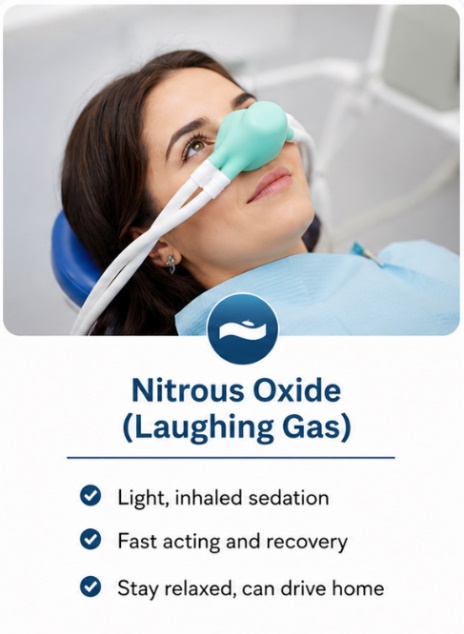
Nitrous oxide — often called laughing gas — is the lightest sedation option available at Calm Dental Care. It has been used in dentistry for decades and can help patients with mild anxiety, a sensitive gag reflex, or difficulty relaxing during routine treatment.
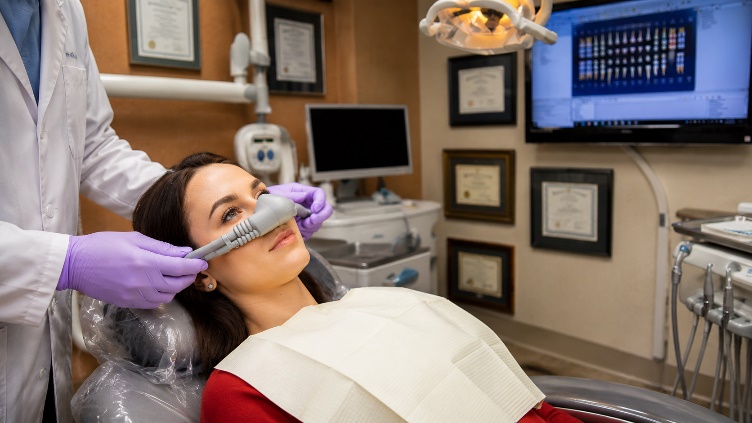
A small mask is placed over your nose, delivering a controlled mixture of nitrous oxide and oxygen. Within a few minutes you may feel warm, light, peaceful, or pleasantly detached from what is happening around you.
You stay awake and can talk with Dr. Maxson and the team throughout your appointment. The level can be adjusted during treatment, and the effects generally clear soon after the gas is stopped.
Nitrous oxide may be appropriate when:
You experience mild or situational anxiety
You are nervous about injections
You have a sensitive gag reflex
You need a cleaning, filling, crown, or shorter procedure
You want help relaxing without a long recovery
Most patients leave without lingering drowsiness and resume their usual activities. Your individual response and fitness to drive are evaluated before you go.
A patient during nitrous oxide sedation
Oral Conscious Sedation
A prescription medication for deeper relaxation.
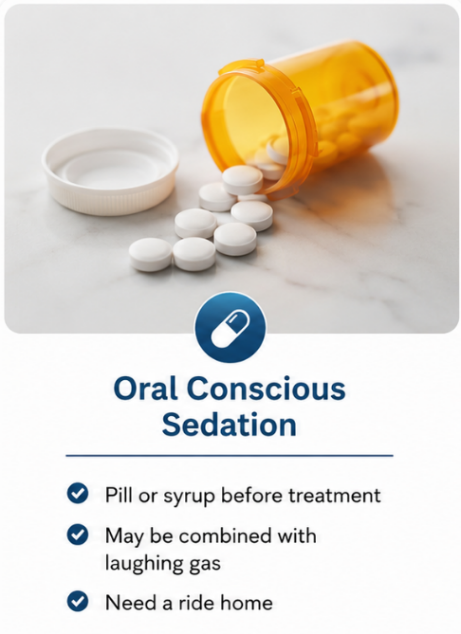
Oral conscious sedation may be recommended for patients with moderate dental anxiety, or for longer and combined procedures.
Dr. Maxson prescribes medication to be taken according to specific instructions before treatment. By the time your appointment begins, you may feel drowsy, peaceful, and far less aware of the sights, sounds, and sensations that previously caused anxiety.
You remain conscious and able to respond, though many patients experience partial or substantial amnesia and remember very little afterward. Oral sedation may also be combined with nitrous oxide when clinically appropriate.
Important instructions for oral sedation. Because the medication affects coordination, alertness, and judgment:
A responsible adult must drive you to and from the office
You should not drive, work, make important decisions, or operate equipment afterward
Someone should remain with you for the period Dr. Maxson recommends
Plan to rest quietly for the remainder of the day
All eating, drinking, and medication instructions must be followed exactly
Oral medication does not affect every person identically. That is one reason Dr. Maxson carefully reviews your health history and medications before recommending it.
IV Moderate Sedation
Precisely adjustable sedation for significant anxiety or extensive treatment.
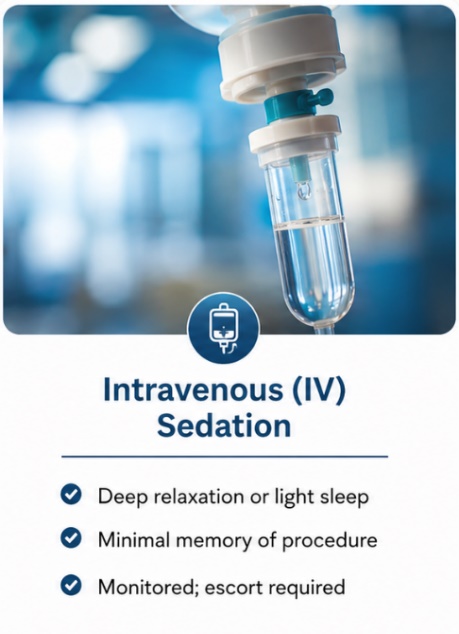
IV moderate sedation is the deepest level offered at Calm Dental Care. It may be appropriate for patients with severe dental fear, patients requiring extensive treatment, or those who want to complete several procedures in fewer appointments.
A small intravenous line is placed, similar to a blood draw. Sedative medication is delivered directly into the bloodstream, so it takes effect quickly.
One of the main advantages of IV sedation is titration. Rather than relying entirely on a medication taken earlier, Dr. Maxson can adjust the medication during treatment based on your response and the length of the procedure — a level of control that cannot be achieved as predictably with oral medication alone.
You are not unconscious the way you would be under general anesthesia. You continue breathing independently and can respond when spoken to, though you may feel as though you slept through the appointment. Many patients remember little or nothing afterward.
Your breathing, heart rate, blood pressure, oxygen level, and other appropriate vital signs are monitored throughout the procedure.
What Will I Feel During Sedation?
Experiences differ depending on the method and the individual patient.
With nitrous oxide, you will usually feel relaxed but fully aware of your surroundings.
With oral conscious sedation, you may feel very drowsy and detached. Time may seem to pass quickly, and your memory of the visit may be limited.
With IV moderate sedation, you may drift in and out of light sleep and remember little or nothing about the procedure. You can still breathe on your own and respond to verbal direction.
Sedation does not necessarily mean you will be completely asleep. Many patients who later say they slept through everything were technically responsive during treatment — they simply have little memory of it.
Will I Still Receive Local Anesthetic?
Yes.
Sedation reduces anxiety, awareness, and emotional distress. Local anesthetic blocks discomfort in the area being treated. The two work together.
One advantage is that sedation is already helping you relax by the time local anesthetic is given. Patients who previously feared injections often find this part of the visit far easier than expected.
Can Several Procedures Be Completed During One Visit?
In many cases, yes.
When a patient is comfortable and able to tolerate a longer appointment, Dr. Maxson may be able to combine procedures that would otherwise take several separate visits. This can be especially helpful for patients who:
Have extensive decay or broken teeth
Need several crowns or restorations
Require extractions or implant treatment
Have limited time away from work or family
Experience significant anxiety before every appointment
Whether treatment should be combined depends on your health, the procedures involved, the estimated appointment length, and what can be completed responsibly.
Sedation should never be used simply to rush dentistry. It should make carefully planned treatment more manageable.
What Should I Expect Before My Sedation Appointment?
You will receive instructions based on the type of sedation being used. These may include:
When to stop eating and drinking
Which regular medications to take or temporarily withhold
What clothing to wear
When your escort must arrive
How long someone should remain with you afterward
Activities to avoid following treatment
Do not change any prescribed medication unless specifically instructed by Dr. Maxson or your physician.
For oral or IV sedation, transportation must be confirmed in advance. Treatment may need to be postponed if a responsible escort is unavailable.
What Happens After the Appointment?
Recovery depends on the sedation method.
After nitrous oxide. The effects usually resolve quickly. Most patients feel clear-headed soon after the mask is removed.
After oral or IV sedation. Expect lingering drowsiness and plan to rest at home. You may have little memory of conversations right after treatment, so written instructions are provided to you and your escort.
For the period specified by Dr. Maxson, you should not:
Drive
Drink alcohol
Operate machinery
Exercise vigorously
Sign contracts or make major decisions
Take unapproved medications
Remain alone if supervision has been instructed
The office may follow up afterward to see how you are feeling and answer any questions.
How Much Does Sedation Dentistry Cost?
The fee depends on:
The sedation method selected
The length of the appointment
The medication and monitoring required
Whether sedation is combined with another method
The complexity of the planned treatment
Nitrous oxide is generally the least costly option. Oral and IV sedation require additional preparation, medication, monitoring, recovery time, and clinical resources.
Some dental insurance plans may contribute when sedation is considered medically or clinically necessary, while others classify it as an elective service. Calm Dental Care will explain anticipated fees and available benefits before treatment begins.
Why Choose Dr. Maxson for Your Sedation Dentistry?
Sedation dentistry requires more than prescribing a pill and hoping the patient relaxes. The dentist must understand medication selection, dosing, drug interactions, patient assessment, airway management, monitoring, recovery, and emergency procedures.
Dr. Maxson’s credentials include:
More than 25 years of experience providing various forms of dental sedation
Completion of a postgraduate dental sedation program through The Herman Ostrow School of Dentistry of USC (University of Southern California School of Dentistry)
California Dental Board certification in both conscious and moderate sedation
Service as a California Dental Board evaluator assessing other dentists seeking sedation certification
Membership in the Dental Organization for Conscious Sedation, now known as DOCS Education
ACLS (Advanced Cardiac Life Support) Certified
Affiliation with the American Dental Society of Anesthesiology
Dental Organization for Conscious Sedation
Frequently Asked Questions About Sedation Dentistry
Can I drive myself?
+
Patients can generally drive after nitrous oxide once they have recovered and been cleared to leave. You cannot drive after oral or IV sedation — a responsible adult must provide transportation and may need to stay with you afterward.
What if I have difficulty getting numb?
+
Tell Dr. Maxson before treatment. Anxiety, anatomy, inflammation, and previous experiences can all affect how patients respond to local anesthesia. Sedation may reduce anxiety and improve the overall experience, and Dr. Maxson will also address your local anesthetic needs directly.
What if I am afraid of the IV?
+
This is common. Depending on the plan, medication may sometimes be used before IV placement. Dr. Maxson will explain the sequence and help make the process as comfortable as possible.
Will I remember the procedure?
+
Nitrous oxide patients generally stay aware and remember the appointment. Oral and IV sedation frequently reduce memory, though the degree of amnesia cannot be guaranteed.
Am I too old for sedation dentistry?
+
Age alone does not determine eligibility. Your overall health, medications, medical conditions, and planned treatment matter more. Dr. Maxson will evaluate these factors before making a recommendation.
How do I know which sedation option is right for me?
+
You do not have to decide on your own. Dr. Maxson reviews your medical history, medications, anxiety level, and planned treatment, then recommends the gentlest option that will let you receive care comfortably. Call 408-996-0176 to start that conversation.
Will I be unconscious?
+
No. All three options keep you breathing on your own and able to respond — this is not general anesthesia.
Do I still get numbing medication?
+
Yes. Sedation calms anxiety; local anesthetic blocks discomfort. They work together.
A Calmer First Step — Without Pressure
You do not need to agree to treatment during your first conversation. Begin by telling us what concerns you.
Maybe you had a painful experience years ago. Perhaps you are embarrassed about the condition of your teeth. You may need extensive treatment and cannot imagine sitting through it. Those concerns are exactly why sedation options exist.
Dr. Maxson will review your health, listen to what has made dental care difficult, explain the available levels of sedation, and help you decide whether one is right for you.
“Dr. Maxson is great and his staff are very nice to patients. My previous dentist told me one of my teeth need to be removed, but Dr. Maxson told me I will treat your teeth like my teeth, I will not remove them if it’s not necessary. He saved my teeth. Sedation really helped me to calm down and the job is well done. Thanks Dr. Maxson to save my teeth, and I will come back again.”
Joanna Z. — Sedation Patient
Schedule a Sedation Dentistry Consultation in San Jose
Fear should not be the reason you keep living with pain, avoid smiling, or postpone necessary care. With an experienced sedation dentist, careful monitoring, and a plan built around your comfort level, dentistry may feel very different from what you remember.
Author / provider: Douglas R. Maxson, DDS — Calm Dental Care, San Jose, California · Clinically reviewed by: Douglas R. Maxson, DDS · Last updated: October 1, 2026
Sedation Dentistry in San Jose
Nitrous oxide, oral, and IV sedation with Dr. Douglas Maxson. Your first step can simply be a conversation. Call 408-996-0176.