
What Is Professional Teeth Whitening?
Professional whitening — also called tooth bleaching — uses hydrogen peroxide or carbamide peroxide to break apart the stain molecules held inside tooth enamel. As those molecules break down, the tooth reflects light differently and looks lighter. Nothing is drilled, removed or added.
The difference between professional whitening and a drugstore kit is not only the strength of the gel. It is that professional whitening starts with an examination. Before any gel touches a tooth, we look for the things that change the answer: untreated decay, a leaking or failing filling, gum recession with exposed root surface, cracks, existing restorations in the smile zone, and a single tooth that has darkened from injury or previous root canal treatment. Any of those can make whitening uncomfortable, uneven, or simply the wrong treatment.
Why Do Teeth Become Discolored?
Tooth color comes from a combination of the enamel on the outside and the dentin underneath, and both change over a lifetime. Some discoloration sits on the surface. Some of it is inside the tooth. The two do not respond to the same treatment, which is why the cause matters more than the shade.
Common causes
- Coffee, tea, red wine, colas and other dark beverages
- Tobacco and nicotine products
- Deeply pigmented foods — berries, sauces, curries and spices
- Natural aging, as enamel thins and the darker dentin beneath shows through
- Plaque and tartar buildup
- Certain medications, and fluorosis or other changes in how enamel formed
- Injury to a tooth, or changes inside a tooth after root canal treatment
- Older fillings, crowns, veneers or bonding that no longer match the teeth around them
A professional cleaning removes surface stain from plaque, tartar, food and drink. Whitening does something different — it lightens the color of the tooth itself. Part of your consultation is sorting out which one you actually need, because some patients who come in asking about whitening are happier after a cleaning and a replaced front filling.
Your Whitening Option at Calm Dental Care
How it works
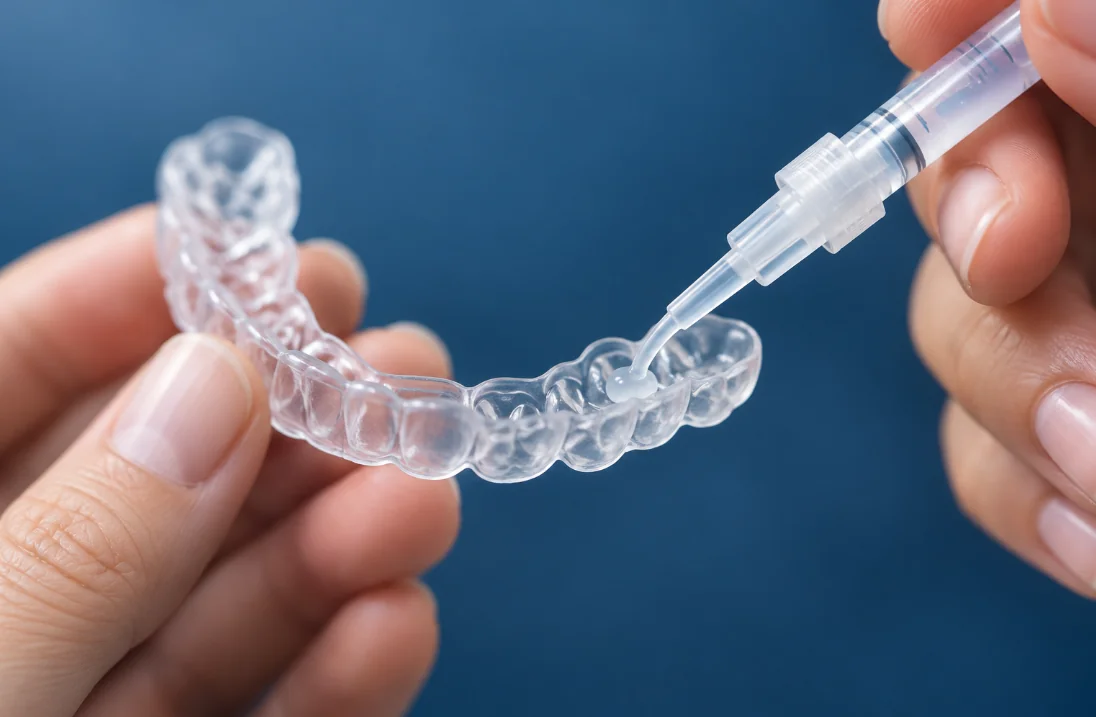
Custom trays are made from impressions or a digital scan of your teeth, and you whiten at home with professional-strength gel on a schedule we set with you.
A good fit when…
You prefer to go at your own pace, want more control over the final shade, or have a history of sensitivity.
Worth knowing
Custom trays hold the gel against the teeth and away from the gums, which generic trays and strips do not do well. Results build over days to weeks.
Dentist-supervised custom take-home trays
What Results Can You Expect?
Whitening works well for a lot of people and less well for some, and the honest answer before treatment is that we cannot promise you a number on a shade guide. Teeth respond differently depending on the depth and type of staining, the thickness and character of the enamel, your dietary habits, your age, and how consistently the gel is used.
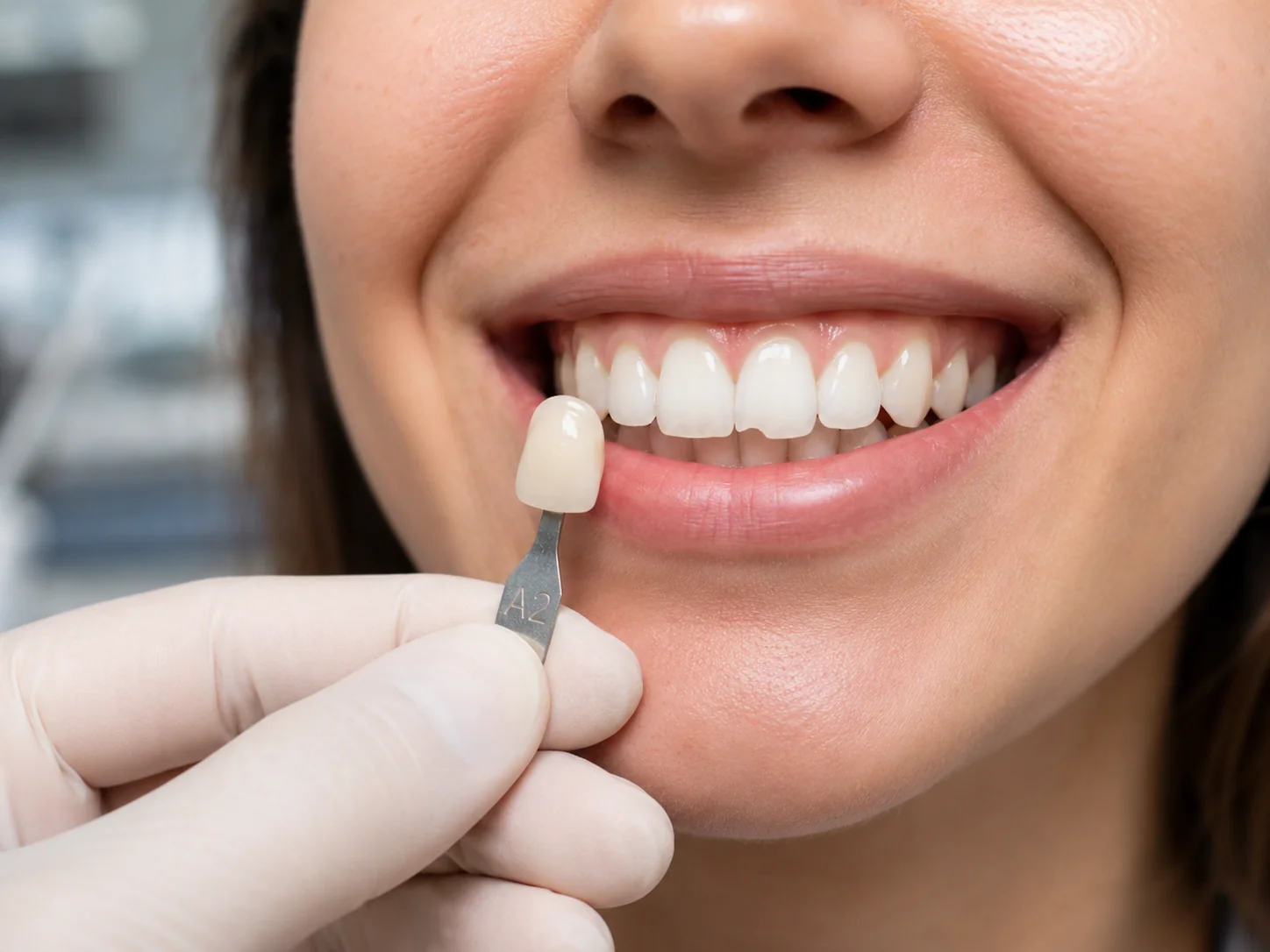
Whitening is generally most predictable for discoloration from food, drink, tobacco and aging. It is less predictable for gray or blue discoloration, staining related to certain medications, white spots and enamel defects, and a tooth that darkened after an injury. The American Dental Association notes that whitening can help with staining both on the surface and within the tooth, but that it is not the right answer for every dark tooth.
The goal here is not the brightest shade on the chart. A whitening result that works is one that looks clean and healthy next to your skin tone and the rest of your face — bright enough that people notice you look well, not so bright that they notice your teeth.
If one tooth is darker than the rest
Standard whitening lightens all the teeth it touches, so if one tooth started darker it will usually still be darker afterward — sometimes more obviously. A single dark tooth is often a sign of something inside the tooth: an old injury, a nerve that has died, or previous root canal treatment. That tooth needs to be evaluated on its own before cosmetic treatment, and the fix may be internal whitening of that tooth, bonding, a veneer or a crown rather than tray whitening.
Whitening and Existing Dental Work
This is the single most important thing to understand before you whiten. Whitening changes the color of natural tooth structure only. It will not lighten:
- Porcelain veneers
- Dental crowns and implant crowns
- Tooth-colored fillings and composite bonding
- Bridges
- Dentures and partials
If you have a crown, veneer, filling or bonding anywhere in your smile zone, whitening the natural teeth around it may make that restoration look darker by comparison — not because it changed, but because everything next to it did. A front crown that matches you perfectly today may not match you three weeks after whitening.
The sequence matters, and it only runs one direction. If you are planning on having porcelain veneers, crowns or new visible fillings, the ideal process would be to whiten the teeth first, let the shade stabilize, then match the new restoration to the brighter color. Once a restoration is made, its color is fixed for good. We will walk through this with you before anything starts, and if you already have a front restoration that no longer matches, we can talk through whether whitening, replacing it, or both is the better order of operations.
Is Teeth Whitening Safe?
Used appropriately and under supervision, whitening is considered a safe cosmetic treatment. The ADA recommends talking with a dentist before whitening, so that the treatment fits the mouth it is going into and so that the chemicals are used correctly.
Temporary sensitivity and mild gum irritation are the most commonly reported side effects. Sensitivity usually shows up as brief cold sensitivity or short "zingers" and typically settles once treatment pauses or finishes. Tell us if you already have sensitive teeth — that is a reason to adjust the plan, not a reason to skip whitening. Sensitivity is usually manageable by shortening wear time, spacing treatments further apart, using less gel, switching to a toothpaste made for sensitivity, or adding a desensitizing product. If sensitivity is significant, lasting several minutes, or getting worse, call the office rather than pushing through it.
We may recommend treating something else first. Untreated cavities, cracked teeth, gum disease, exposed root surfaces, active dental pain or poorly fitting restorations all make whitening less comfortable and less predictable. Handling those first is not a delay tactic; it is what makes the whitening work more effectively.
A word about over-the-counter products
Strips, pens and drugstore gels can lighten teeth temporarily, somewhat, and used as directed they are not dangerous. The problem is what happens when they are used continuously. The ADA has cautioned that overusing whitening products can irritate the gums, increase sensitivity, and leave teeth looking more translucent — which reads as gray at the edges, not white. More gel and more frequency do not produce more whitening past a point; they mostly produce more sensitivity.
When Whitening Is Not the Answer
Short of having a professional tooth cleaning, whitening is the simplest cosmetic treatment there is, so it is worth trying first when it is likely to work. When it is not, we will say so rather than sell you a tray. Depending on what is causing the appearance you want to change, the better option may be:
- Cosmetic bonding — for chips, small gaps, or a single discolored area that whitening will not even out
- Porcelain veneers — for deep internal discoloration, enamel defects, or when shape and color both need addressing
- A crown — when the tooth also needs structural coverage
- Replacing an old restoration — when the thing that looks wrong is a filling or crown, not the tooth
- A cleaning first — when the discoloration is surface stain, plaque and tartar
Whitening Before a Wedding or Special Event
If you want a brighter smile for a wedding, a reunion, a professional photo or an interview, start earlier than you think you need to. Giving the process a few weeks leaves room to examine the teeth and gums, take care of anything that needs treatment, clean the teeth if that is appropriate, whiten gradually rather than aggressively, manage sensitivity if it shows up, let the shade settle, and coordinate any bonding or restorations to the final color. Call the office as soon as you know the date and we will work backward from it.
How to Keep Your Results
Whitening is not permanent. Teeth keep meeting coffee, keep aging, and gradually drift back. How fast depends mostly on your habits. To hold the result longer:
- Brush twice a day with fluoride toothpaste and clean between your teeth daily
- Keep up with regular exams and professional cleanings
- Rinse with water after coffee, tea, red wine or cola
- Avoid long, slow sipping of staining drinks — an hour with a single cup stains more than ten minutes with two
- Use a straw for cold dark drinks when it is practical
- Avoid tobacco and nicotine products
- Keep your custom trays somewhere safe and touch up occasionally, as directed — not continuously
Why Start With an Exam at Calm Dental Care
Whitening is sold everywhere, which is exactly why it is worth having a dentist look first. Dr. Maxson examines the teeth and gums, identifies what is actually causing the color you want to change, tells you whether whitening is likely to accomplish it, and plans the sequence around any existing dental work so you do not end up with a bright smile and one dark crown in the middle of it.
Consultations for whitening are complimentary. If whitening is not going to give you the result you are picturing, we would rather tell you that at the consultation than after you have paid for it.
Frequently Asked Questions About Teeth Whitening
How white will my teeth get?
+
Results vary, and no dentist can ethically promise a specific shade in advance. Whitening often makes natural teeth noticeably brighter, but your starting color, the type of stain and your enamel all affect the outcome. We will give you a realistic expectation at the consultation rather than a number on a chart.
Does teeth whitening hurt?
+
Most patients tolerate it well. Some notice temporary cold sensitivity or brief zingers during or after treatment, and some notice mild gum irritation. If you already have sensitive teeth, tell us — we can slow the schedule, shorten wear times, or add a desensitizing product.
Can I whiten if I have crowns, veneers or fillings?
+
You can whiten your natural teeth, but the restorations will not change color. If they are visible when you smile, whitening may create a mismatch. We will look at where your existing dental work sits and help you plan the sequence before you start.
Should I whiten before getting a veneer or crown?
+
In most cases, yes. Whitening first and letting the shade stabilize lets the new restoration be matched to the color you actually want. Once a crown or veneer is made, whitening will never change it.
How long do whitening results last?
+
It depends on your diet and habits more than on the treatment. Coffee, tea, red wine and tobacco all bring the color back faster. Many patients keep custom trays and do a short touch-up occasionally to hold the shade.
Is whitening safe for enamel?
+
Used as directed and under professional guidance, whitening is designed to lighten the tooth without removing enamel. Following the prescribed amount, frequency and wear time is what keeps it that way — continuous overuse is where problems come from.
Should I have my teeth cleaned first?
+
Often, yes. Plaque, tartar and surface stain sit between the gel and the tooth and can produce an uneven result. Depending on your oral health and when you were last cleaned, we may recommend a cleaning before whitening.
Can I whiten if my teeth are already sensitive?
+
Possibly, with adjustments. An exam first is important, because sensitivity can come from recession, decay, a crack or worn enamel — conditions that should be treated rather than whitened over.
Can one dark tooth be whitened?
+
Sometimes, but usually not with the same technique used on the rest of the smile. An isolated dark tooth is often related to an old injury or a tooth that has had root canal treatment, so it needs to be evaluated on its own first.
Is whitening toothpaste enough?
+
Whitening toothpaste mainly helps remove some surface stain. It does not change the internal color of the tooth the way a peroxide-based whitening treatment does.
Ready to talk about whitening?
Call (408) 996-0176 and we will schedule your consultation.
Not sure whitening is the right treatment?
That is what the consultation is for. Send a request and we will get back to you within one business day.
Event coming up?
Tell us the date when you call so we can plan backward from it.
Written and clinically reviewed by Douglas R. Maxson, DDS, Calm Dental Care, San Jose, CA. Last updated October 1, 2026.