Sinus Lifts for Dental Implants in San Jose
A sinus lift, also called sinus augmentation, adds bone beneath the maxillary sinus to help support dental implants in the upper back jaw. At Calm Dental Care in San Jose, CA, Dr. Douglas R. Maxson evaluates whether this procedure could make implant treatment possible when there is not enough existing bone.
Being told you do not have enough bone for an implant does not always mean you have reached the end of your options. A sinus lift may create an opportunity to replace missing upper back teeth and work toward more comfortable chewing.
Dr. Maxson has successfully performed sinus lift procedures for patients who needed additional bone support. Your consultation focuses on your anatomy, treatment goals, and the approach appropriate for your situation.
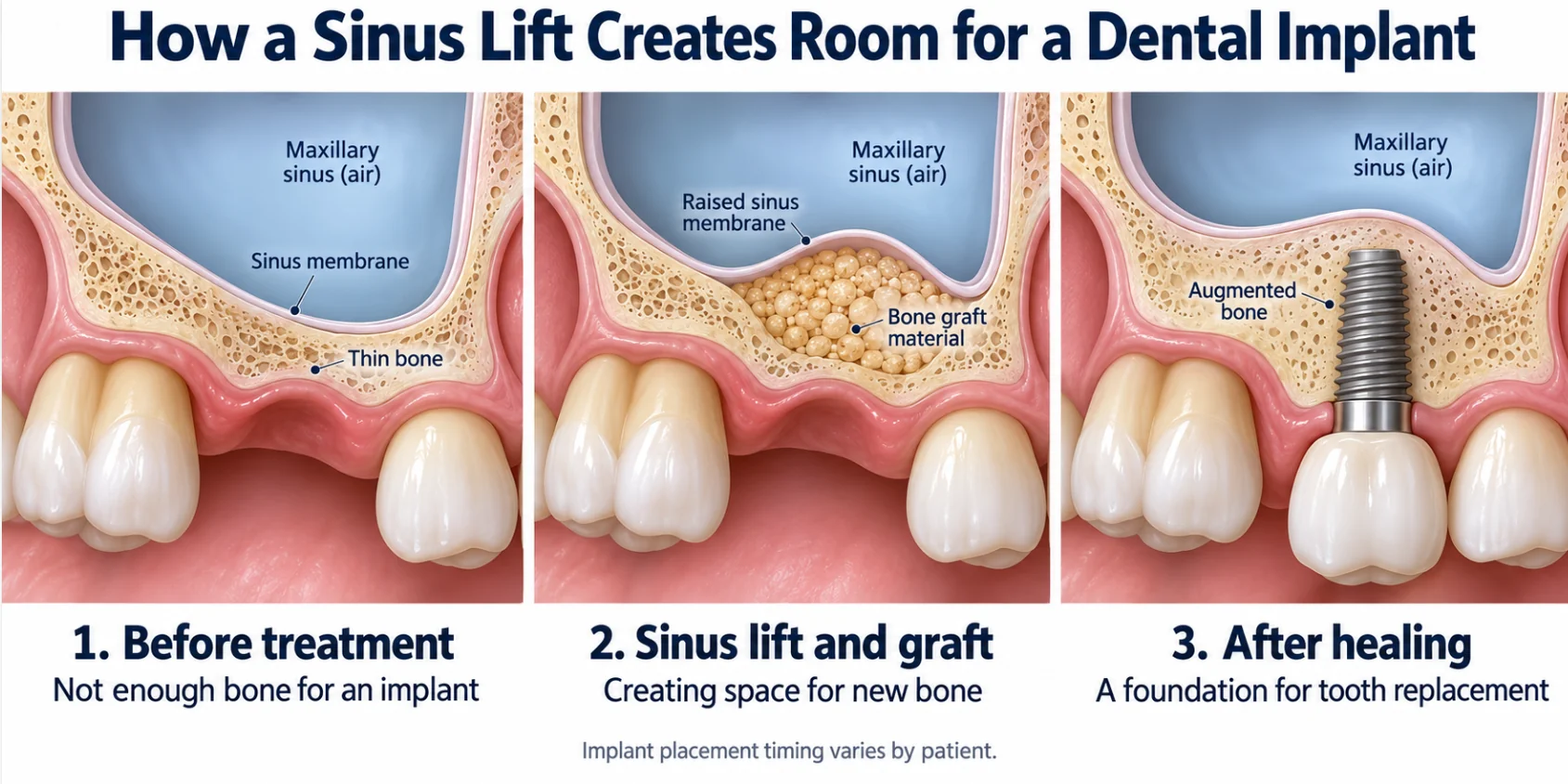
Why missing upper teeth can leave too little bone
The maxillary sinuses are air-filled spaces above the upper back teeth. The amount of bone between these spaces and the mouth varies from person to person.
After tooth loss, the ridge can shrink, and the sinus may expand downward. Together, these changes can reduce the height of bone available for an implant. Gum disease can also contribute to bone loss.
This is particularly relevant when an upper premolar or molar has been missing for years, although a long-standing gap is not the only reason someone may need augmentation.
What a sinus lift actually changes
A sinus lift creates space beneath the thin membrane lining the sinus. Bone graft material is placed in this space to support the development of additional bone.
The aim is to increase usable bone height at the planned implant site. The procedure does not replace the missing tooth by itself; it prepares the foundation for the implant portion of treatment.
Think of it as preparing the site before rebuilding. The final goal is a tooth replacement that functions well—not simply a successful graft.
A smaller sinus “bump” or a larger lift?
You may hear a smaller internal lift called a sinus bump. This approach works through the implant preparation site and may be considered when only a modest increase in height is needed.
A larger, lateral-window lift accesses the area through the side of the upper jaw and allows more extensive augmentation.
The choice depends on existing bone, sinus anatomy, and the planned implant. A smaller approach is not automatically appropriate simply because it sounds easier.
Planning with 3D CBCT imaging
Dr. Maxson uses three-dimensional CBCT imaging to assess the proposed treatment area. Planning includes evaluating the available bone and its relationship to the sinus.
Bring your questions to the consultation, especially if you have previously been told an implant was not possible. We can explain the findings in everyday language and show you how they affect the recommendation.
You should understand whether the plan involves a sinus lift, another approach, or further evaluation before making a decision.
When can the dental implant be placed?
Some patients can receive an implant at the same appointment as sinus augmentation. Others need the graft to heal first because there is not enough existing bone to stabilize an implant.
For staged treatment, bone development commonly takes approximately four to twelve months, depending on the procedure and individual healing. Dr. Maxson reassesses the site before proceeding.
Implant placement and the final crown may require additional healing and appointments. Feeling comfortable again after surgery does not mean the graft is ready to support an implant.
Comfort and sedation options
It is understandable to feel nervous about a procedure involving the sinus. We encourage you to discuss that concern before scheduling treatment.
Local anesthesia is used to numb the surgical area. Ask about sedation options and what would be appropriate for your health, procedure, and comfort needs.
We explain preparation and recovery expectations ahead of time so you can arrange your schedule and transportation. You do not need to arrive wondering what will happen next.
Preparing for your appointment
Make recovery easier by organizing your home and calendar beforehand.
Have soft foods and cold packs available, allow time to rest, and avoid scheduling demanding activities immediately after surgery. If your sedation plan requires an escort, arrange a responsible adult to drive you home and assist as instructed.
Provide an updated medication list and tell us about sinus infections, congestion, previous sinus surgery, and changes in your health. Follow your individualized instructions about medications, eating, and drinking.
Protecting the graft during recovery
You will receive written instructions specific to your procedure. Sinus precautions commonly include avoiding nose blowing and sneezing with your mouth open rather than pinching your nose shut.
Follow the recommended limits on exercise, lifting, and activities that increase pressure. Ask before flying, diving, or resuming activities that may affect the sinus.
Take prescribed medicines only as directed. Contact the office about persistent bleeding, fever, worsening pain or swelling, or concern that graft material has moved.
Your follow-up visits are part of treatment. They allow us to monitor recovery and plan the next stage.
Benefits, limitations, and alternatives
For an appropriate candidate, a sinus lift can make implant placement possible where bone height was previously inadequate. The eventual implant restoration may improve chewing function and confidence.
However, grafting does not guarantee implant placement or long-term implant success. Risks include a tear in the sinus membrane, infection, and inadequate bone development. A complication may change the plan or extend treatment.
Alternatives may include selected shorter implants, a different implant arrangement, a bridge, or a removable partial denture. We explain which options are relevant to you rather than assuming every missing upper tooth requires a sinus lift.
Understanding the treatment plan and cost
Ask for an explanation of the entire proposed treatment—not just the grafting appointment.
Your plan should clarify the sinus procedure, follow-up care, implant placement, and final tooth replacement. Ask which services are included in the estimate and what could change if additional treatment becomes necessary.
A clear plan helps you weigh the time, cost, and expected benefit against other options.
Frequently Asked Questions About Sinus Lifts
Do all upper dental implants require a sinus lift?
No. A sinus lift is considered when there is insufficient bone height beneath the sinus for the planned implant. Many upper implants can be placed without this procedure.
Can I receive an implant if my tooth has been missing for years?
Possibly. A long-standing gap may require additional planning or grafting, but it does not automatically rule out an implant. Examination and imaging help determine your options.
Is a sinus bump the same as a sinus lift?
A sinus bump is a common informal name for a smaller internal sinus lift. It is one approach to sinus augmentation, generally considered when a modest increase in bone height is needed.
Will I need to wait before getting the implant?
Sometimes. Implant placement may occur during the lift when existing bone provides adequate stability. Otherwise, the graft heals first and the site is reassessed.
Does the sinus lift replace my missing tooth?
No. It prepares bone for a possible implant. The implant and its crown, bridge, or other restoration are separate parts of the tooth replacement process.
What if I have sinus problems?
Tell Dr. Maxson about recurrent infections, ongoing congestion, or previous sinus surgery. These concerns may require further evaluation before treatment.
Is a sinus lift guaranteed to work?
No surgical procedure has a guaranteed result. Careful planning and follow-up help manage risk, but healing problems or insufficient bone formation may require a revised plan.
Find out whether an upper dental implant is possible
If you have been told there is not enough bone for an upper implant, start with an evaluation and an explanation of your options.
Call Calm Dental Care in San Jose at (408) 996-0176 or Request an Appointment online. Dr. Maxson can help you understand whether a sinus lift belongs in your treatment plan.