Dental Bone Grafting in San Jose
Dental bone grafting helps preserve or rebuild the jawbone ridge that supports replacement teeth. At Calm Dental Care in San Jose, California, Dr. Douglas R. Maxson uses bone grafting to help prepare suitable sites for dental implants and, in selected cases, improve the ridge beneath a denture.
If you have been told there is not enough bone for an implant, there may still be options. The first step is understanding how much bone remains and what your tooth replacement will need.
Why the ridge shrinks after tooth loss
The ridge is the part of your jaw that surrounds and supports your tooth roots. After a tooth is removed, this area naturally remodels and can become narrower and shorter over time.
A gap that once had room for a substantial root may eventually leave a thin ridge. Gum disease, injury, and other factors can also affect the available bone.
These changes matter because an implant needs an appropriate foundation—not simply an open space between teeth.
Preserving bone when a tooth is removed
One common reason for grafting is to preserve an extraction socket for a future implant, particularly after removal of a tooth with a large root or multiple roots.
Dr. Maxson may place graft material into the socket at the time of extraction. This is called socket preservation or ridge preservation.
The goal is to limit shrinkage and maintain a useful ridge shape while the area heals. It does not prevent every bone change, and some sites still need additional grafting later. However, discussing preservation before extraction can help keep future options open.
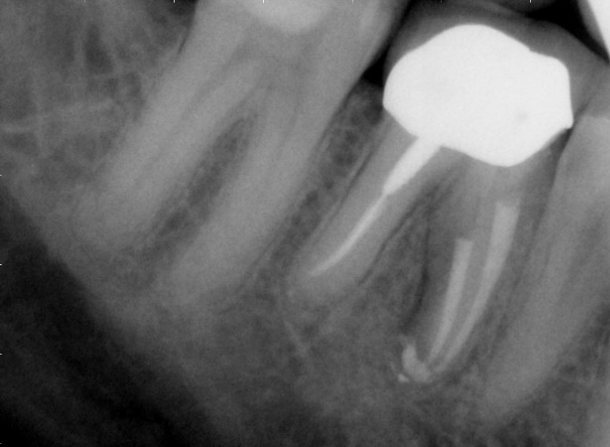
A tooth that requires evaluation for removal.
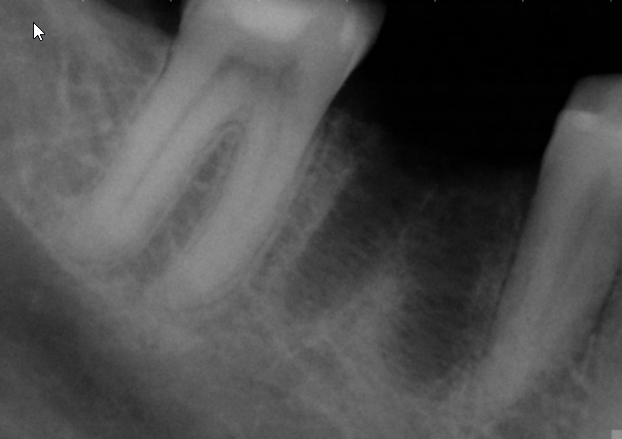
The socket remaining after tooth removal.
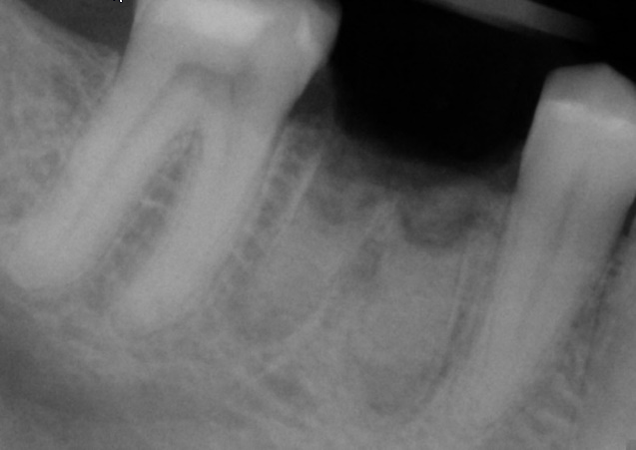
Bone grafting intended to help preserve ridge dimensions.
Creating width and height for an implant
An implant needs enough bone around it as well as beneath it. A ridge may have adequate height but insufficient width—or may need improvement in both dimensions.
Ridge augmentation rebuilds a deficient area to support the planned implant position. The amount of rebuilding depends on the existing ridge and the final tooth replacement.
In the upper back jaw, a sinus lift is a type of bone grafting that creates additional bone height beneath the sinus. It may help make implant placement possible when the existing bone is too shallow. To learn more about sinus lifts
Adding height can be especially challenging. The recommendation considers what can reasonably be achieved, rather than promising that every ridge can be restored to its original size.
Ridge splitting: an option for selected narrow ridges
For some narrow ridges, ridge splitting or expansion may provide another approach.
In simple terms, the ridge is carefully divided and widened to create additional space. Graft material may be placed between the expanded sections to support healing.
This technique requires suitable anatomy and is not appropriate for every site. Dr. Maxson can discuss whether conventional grafting, ridge expansion, or specialist evaluation best fits your situation.
Can grafting help with a denture?
A conventional denture rests on the gums over the underlying ridge. When that ridge becomes smaller, maintaining a comfortable, stable fit can become more difficult.
Selected ridge deficiencies may benefit from augmentation, but grafting is not routinely needed for every denture wearer. An adjustment, reline, replacement denture, or implant-supported option may be more appropriate.
We begin with the problem you want to solve—such as slipping or uncomfortable chewing—and explain which approach offers a reasonable benefit.
Planning with in-office 3D cone-beam imaging
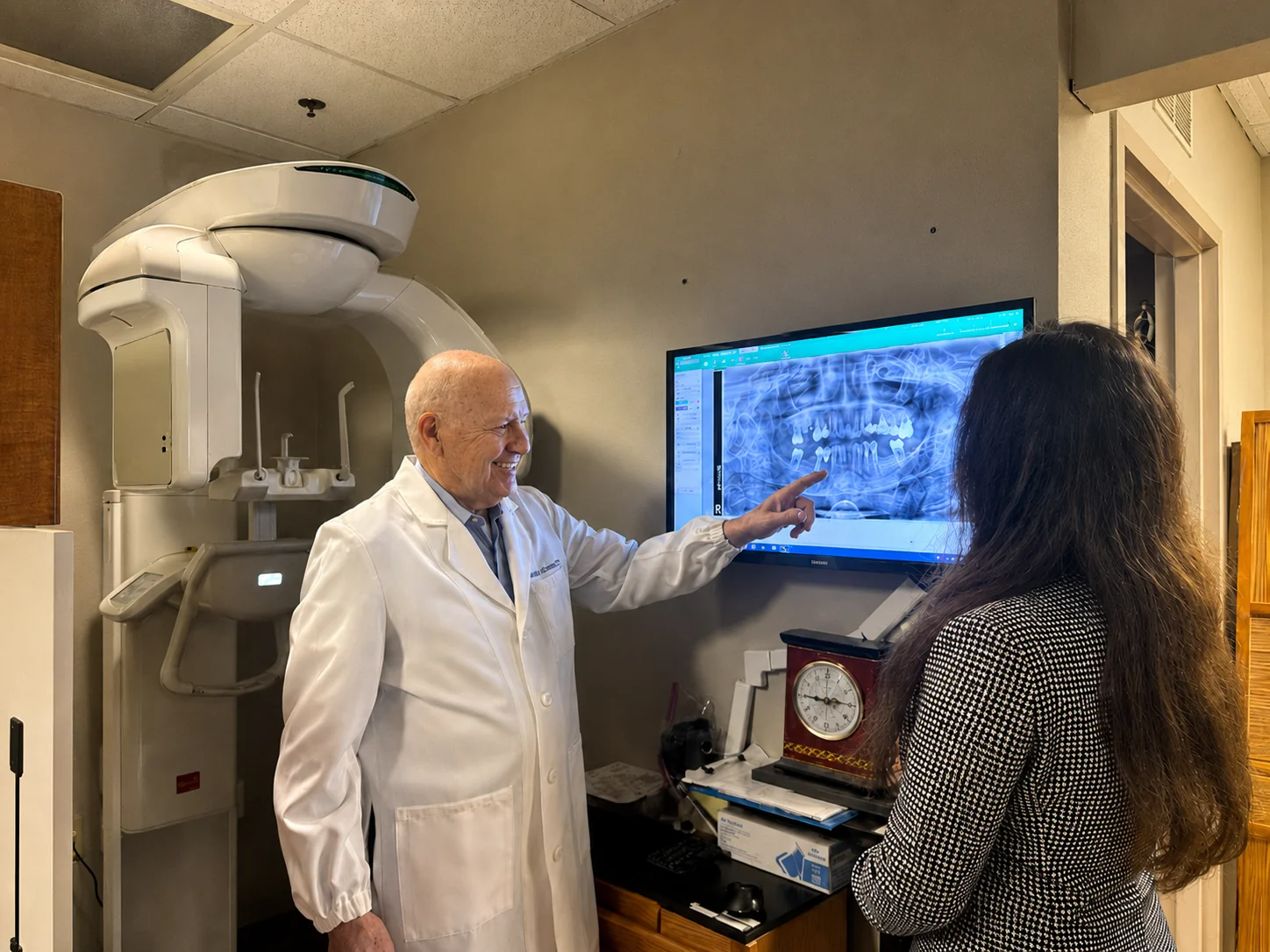
Dr. Maxson has invested in 3D cone-beam CT imaging, also called CBCT, to evaluate proposed graft and implant sites.
A standard two-dimensional X-ray cannot show the ridge’s cross-sectional width and shape in the same way. CBCT helps assess height, width, angulation, and nearby structures such as nerves and the sinus.
This information supports planning for implant position, diameter, length, and possible grafting before surgery. Imaging works together with the clinical examination; it does not guarantee implant stability or precisely quantify bone density.
Experience and a plan you can understand
Dr. Maxson has performed bone grafting as part of implant treatment for more than 35 years and has taught these techniques to other dentists.
Your consultation should clarify why grafting is recommended, the alternatives, and the expected sequence. Ask whether the estimate includes the graft, implant, and final restoration so you understand the complete plan.
Frequently Asked Questions About Bone Grafting
Does every extraction need a bone graft?
No. The decision depends on the site, remaining bone, and replacement plans. Discussing those plans before extraction helps determine whether preservation is worthwhile.
Can the graft and implant be placed together?
Sometimes. Other sites need graft healing before implant placement. The deciding factors include the defect and whether an implant can obtain adequate initial stability.
How long does healing take?
Healing commonly takes several months, depending on the graft and procedure. Dr. Maxson evaluates progress before recommending the next stage; feeling comfortable does not mean bone development is complete.
What is the graft material?
Materials may come from different biological or synthetic sources. They support bone development, but do not all remodel identically. Ask which material is proposed and why.
Does grafting guarantee an implant?
No. Infection, incomplete healing, or insufficient bone development can change the plan. Follow-up care helps assess whether the site is ready.
What should I expect afterward?
Follow your written instructions about eating, cleaning, activity, and medications. Avoid pressure on the grafted area and contact the office about persistent bleeding, fever, or worsening symptoms.
Keep your tooth replacement options open
Whether an extraction is ahead or a tooth has been missing for years, start with an evaluation.
Call Calm Dental Care in San Jose at (408) 996-0176 or request an appointment online to discuss your next steps.